
Built right the first time
Quality control catches a defect at the end of the line. Quality assurance is the discipline that keeps the defect from happening in the first place, built into every station, before a unit ever reaches inspection.
Two jobs, not one
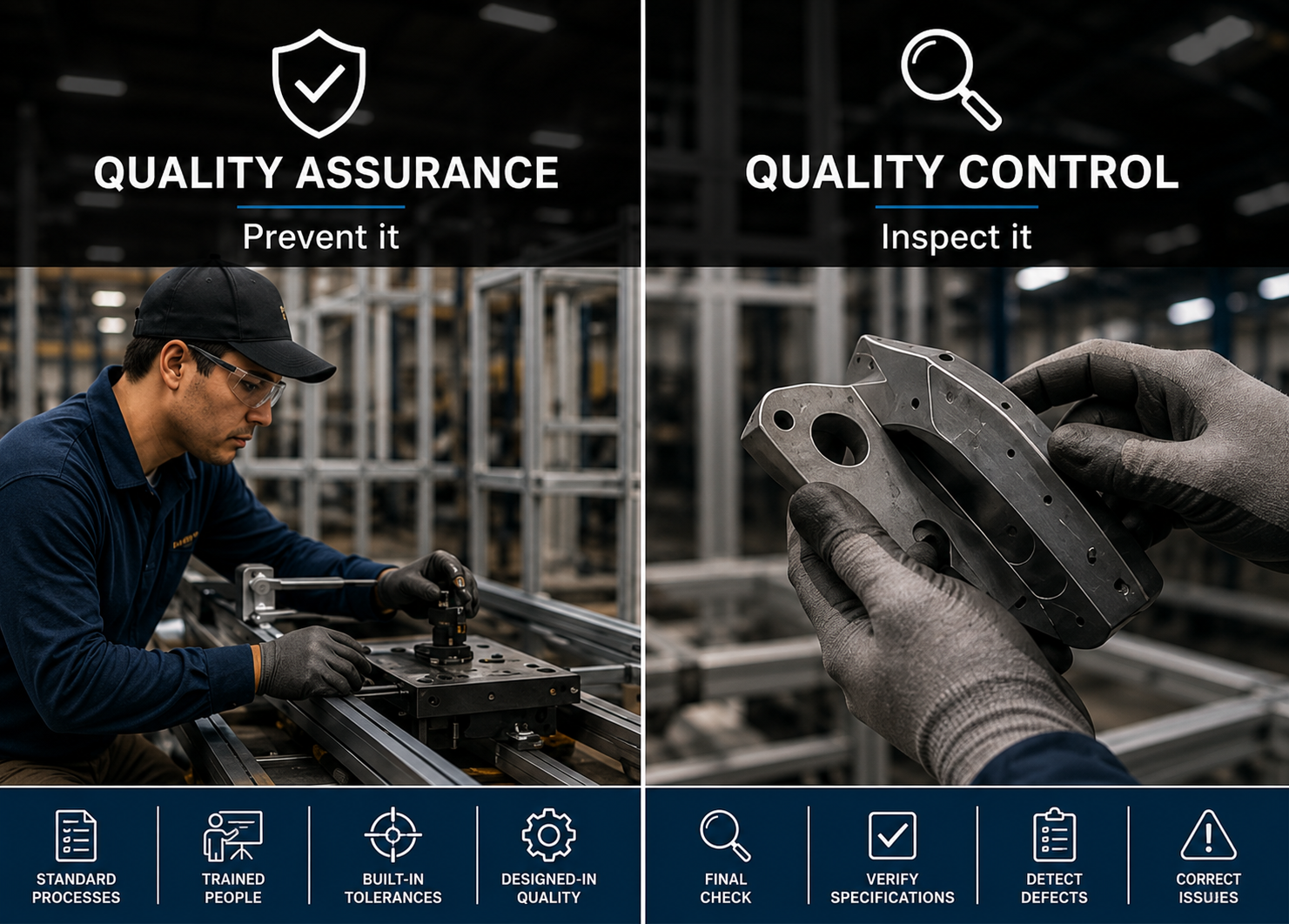
Quality control and quality assurance get used like synonyms. Quality control is verification, inspecting a finished part, weld or assembly to confirm it meets spec, after the work is done. Quality assurance is what happens before any of that: the system of standard processes, trained people and built-in tolerances designed so a part comes off the line correct the first time. One inspects the result. The other is supposed to prevent the result from ever needing correction.
What standard work actually means
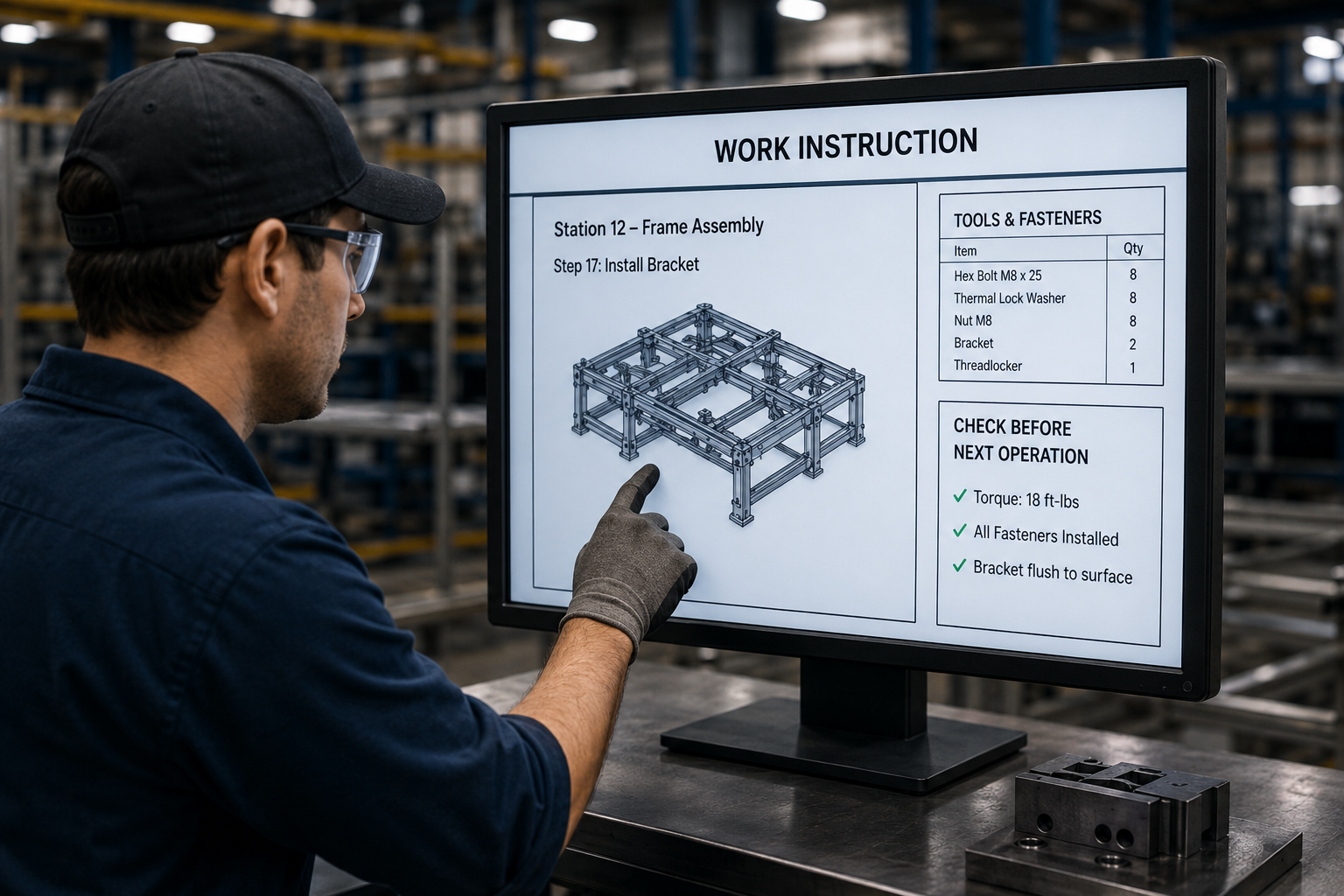
A quality assurance program starts with a written, specific instruction for how a given step gets performed, at every station, every time. Which fastener, which torque, which sequence, which check before the part moves to the next station. That only works if the technician performing a given process is actually trained and qualified on it first. In a proactive system, the tolerance is built into the process itself: the jig that holds a component, the programmed path a 6-axis robotic tool follows, the digital model every cut and weld references.
Watching the process, not just the part
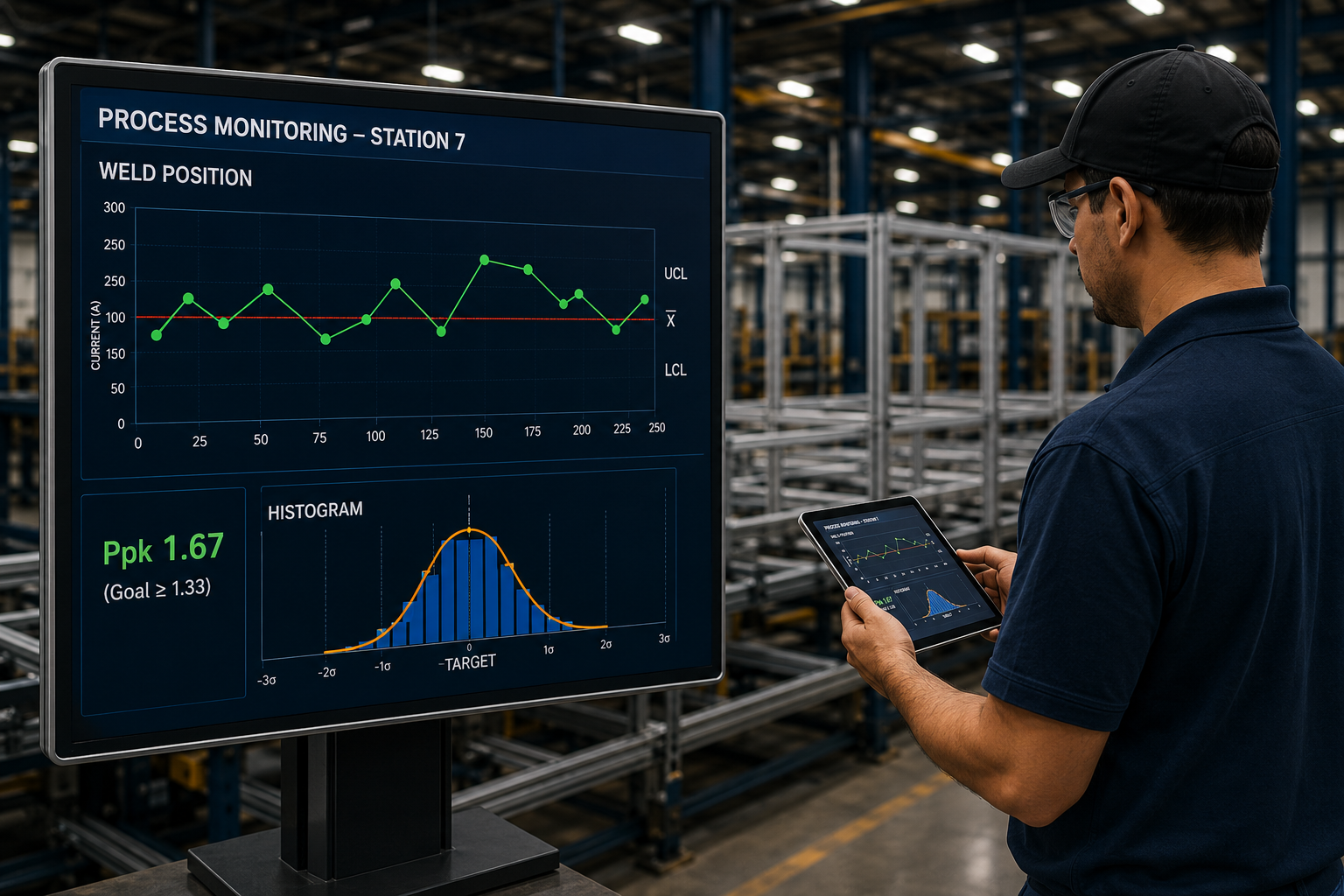
Inspecting a single finished part answers one question: is this part good. It doesn't answer a more useful one: is the process that made it still in control. That's the idea behind statistical process control, track a process's performance over time, across many units, rather than judging pass or fail one part at a time. A process can produce parts that each individually pass inspection while slowly drifting toward the edge of spec. Watched as a trend across many units, that drift is visible early, while the process is still producing good parts.
When something slips through
No process, however well designed, catches everything on paper. When a defect does show up, the difference between a mature QA system and a weak one is what happens next. A mature system asks a harder question: why did the process allow this to happen at all, and what else might it be letting through unnoticed. That's root-cause and corrective action in practice: the fix isn't just repairing or scrapping the one part. It's updating the standard work instruction, the fixture or the qualification requirement so the same failure mode doesn't have the opportunity to recur.
The program the state actually inspects
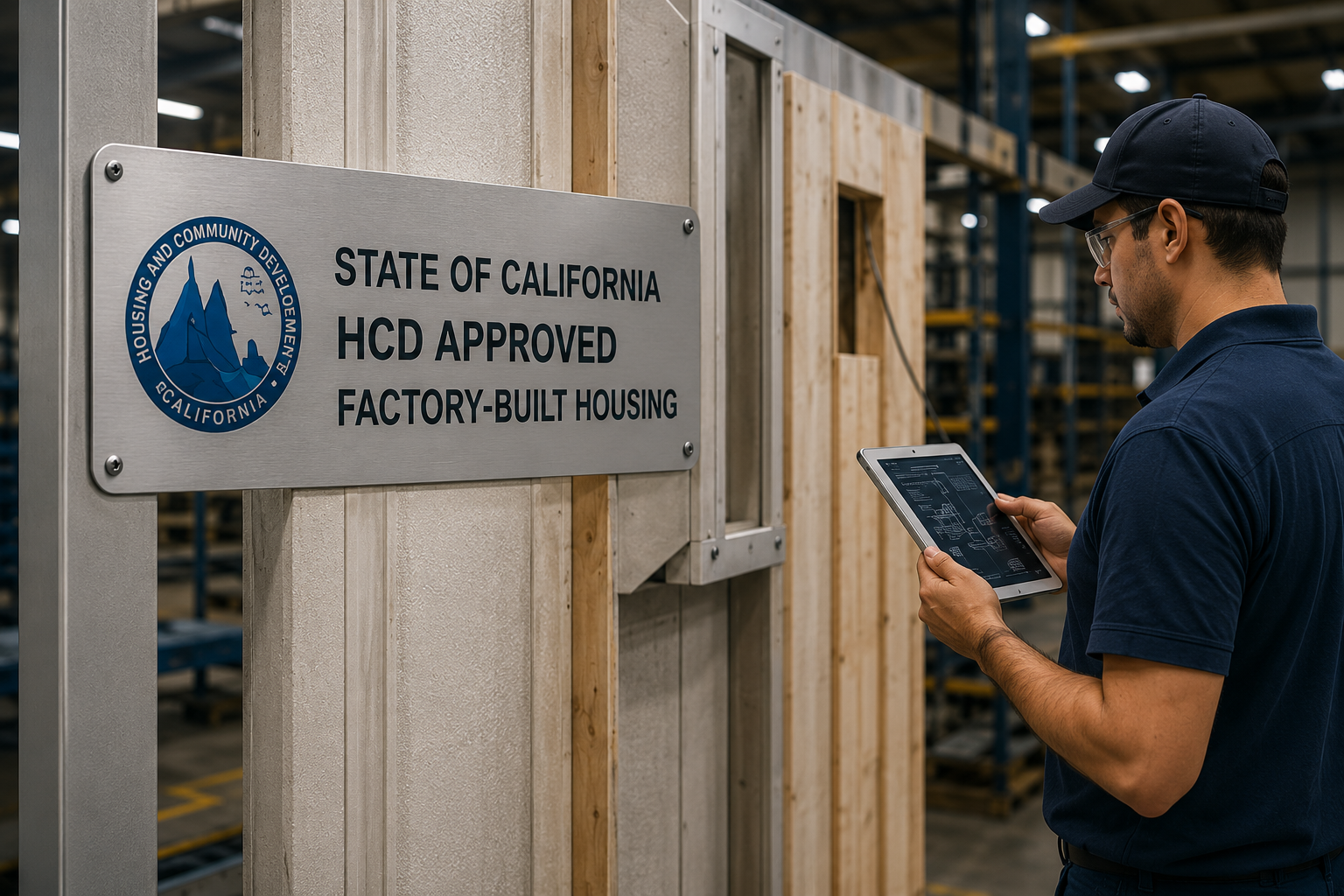
California's Factory-Built Housing Program requires an HCD-approved Quality Assurance Agency to perform in-plant inspection on every unit before it earns its insignia of approval. The regulation requires verification that a unit is built in accordance with the manufacturer's own approved quality control program, and matches the approved plans. The proactive system described on this page isn't separate from the state's regulatory framework, it's the foundation underneath it.
Backed by warranty, not just inspection
The point of QA is to keep a defect from ever reaching a homeowner. When one does, Karlev stands behind the unit with a written, insurance-backed warranty program that mirrors the structure of a factory-built product: a 10-year structural warranty on qualified structural defects, a 2-year systems warranty on electrical, plumbing and mechanical systems, and a 1-year workmanship warranty on materials and finishes including cabinets, countertops, flooring, paint and exterior siding. The structural warranty is insurance-backed so coverage is there regardless of what any single company's future looks like.
The pre-ship check, before the unit ever leaves
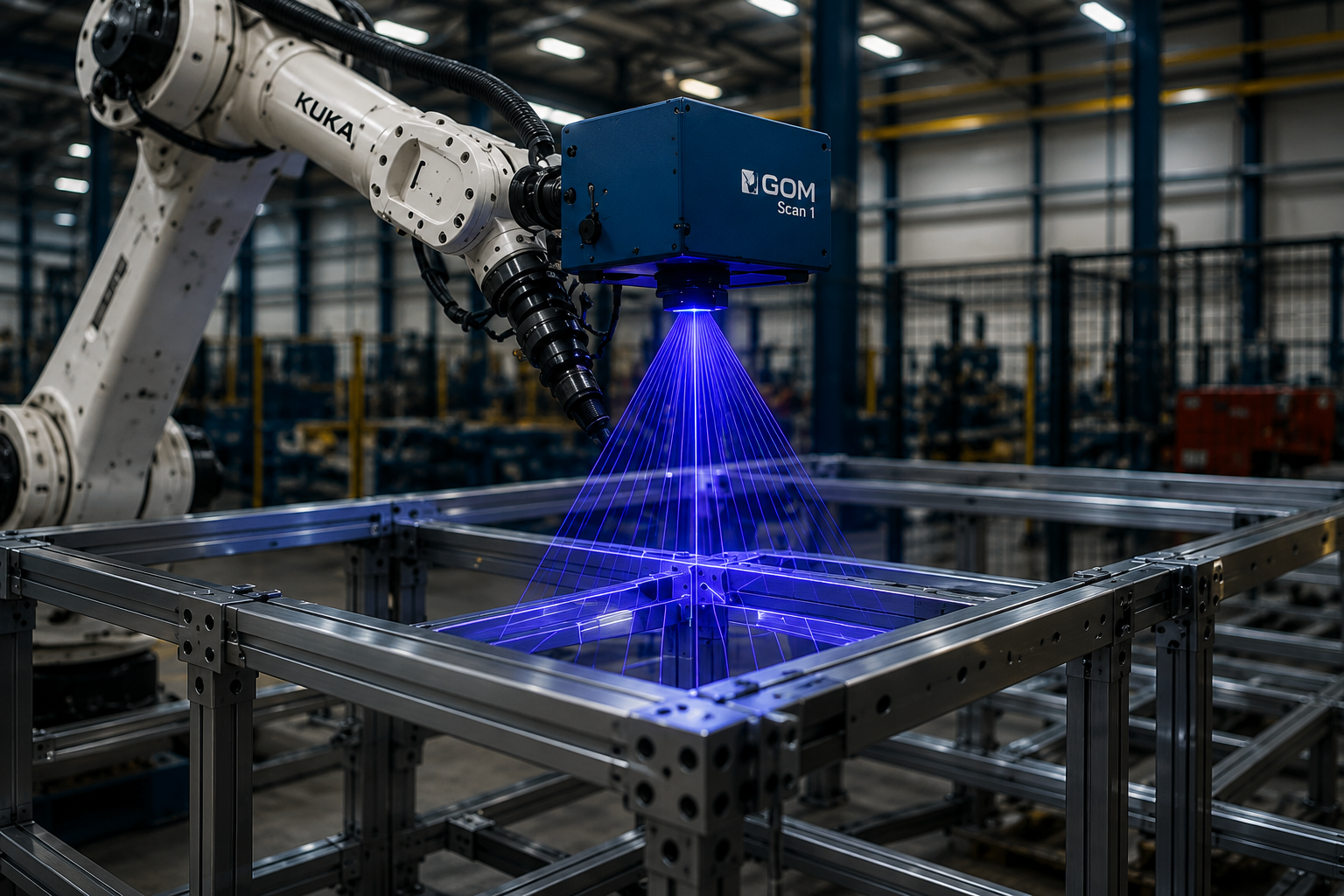
A Karlev unit does not leave the factory floor on schedule alone. Every unit clears a documented pre-ship quality check against the same digital model that earned its HCD plan approval. Structural connections, envelope panel seating, mechanical rough-in, electrical rough-in and plumbing rough-in are each verified at their own stage before that stage closes up, and the completed unit is then checked as a whole prior to load-out. If anything fails a check, the unit does not ship until the standard work instruction, the fixture or the qualification behind that failure has been addressed, not just the individual part.
From our experts
Straight from the Karlev engineering team:
Ready to build together?
Talk with Karlev about bringing this technology to your project.