
Smart materials, standard everywhere
Smart materials means one engineered palette, tested at the system level, not a decision left to whichever crew or vendor shows up on a given day. Every Karlev home draws from the same standardized parts list, from the aluminum spaceframe to the finish nail.
One palette, tested once
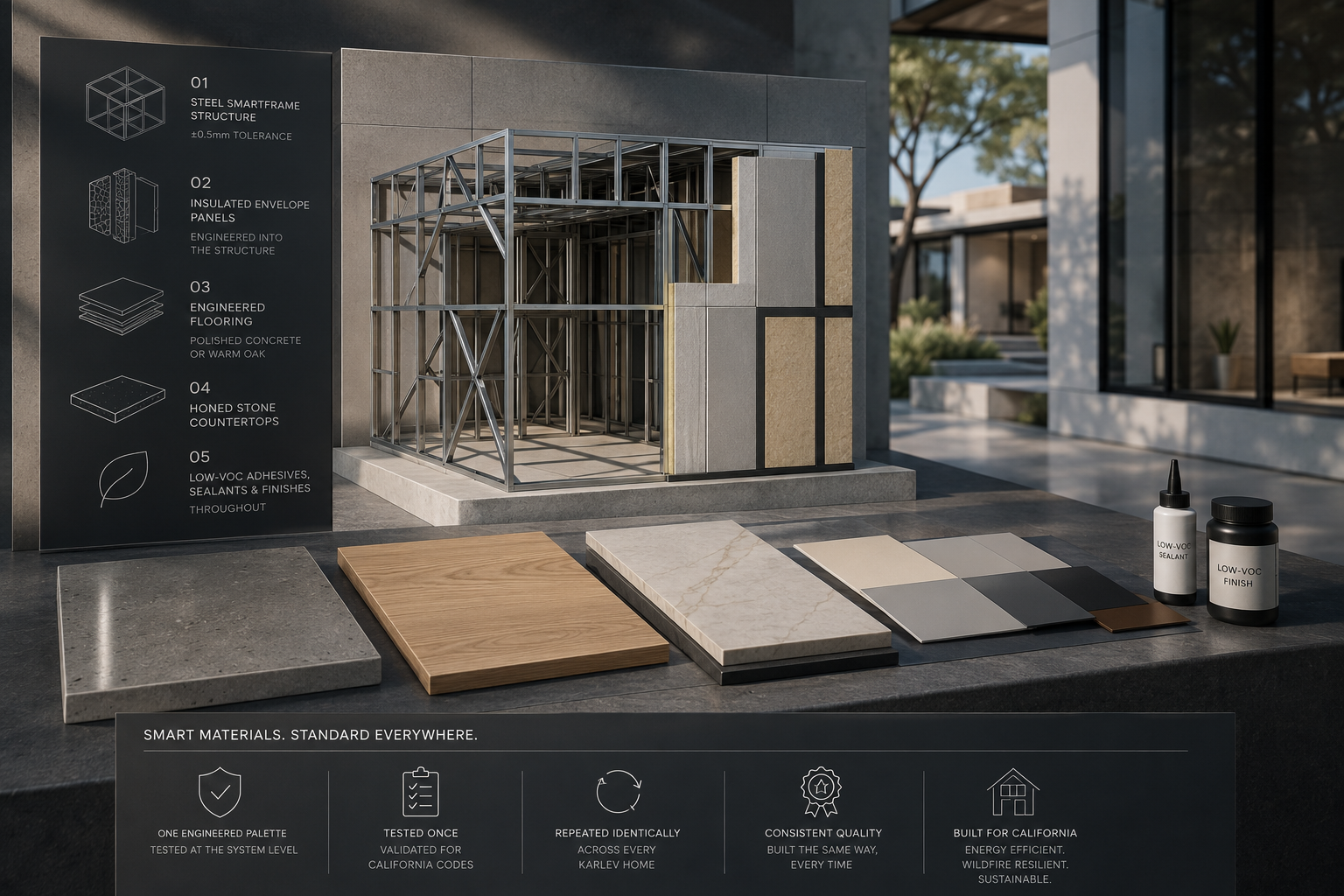
Smart materials doesn't mean exotic. There's no marketing-department composite invented for the occasion. It means a fixed, engineered material palette, patented aluminum spaceframe, insulated metal exterior panels, Marvin Elevate windows, Vadara Quartz counters, Grohe and Kohler fixtures, low-VOC finishes, chosen once, tested once, and built into every home that leaves the factory. Karlev's SmartFrame system removes the variability by design. The palette is decided at the engineering level, validated against California's building and energy codes, and then repeated identically across every unit.
The envelope does the work
Insulation is not a finish. It's the single material decision that determines how a home performs for the next fifty years. Karlev's insulated envelope panels are engineered into the SmartFrame system itself. The result is up to 40 percent better insulation performance than conventional stick-built construction, R-24 exterior walls and R-41 roof. The 2025 California Energy Code, Title 24 Part 6, took effect January 1, 2026, and it raises the bar on building envelopes specifically. Heat pump water heaters are now the prescriptive baseline for new detached ADUs, and expanded envelope requirements make insulation, air sealing, and glazing performance directly load-bearing on code compliance.
Built for a wildfire state
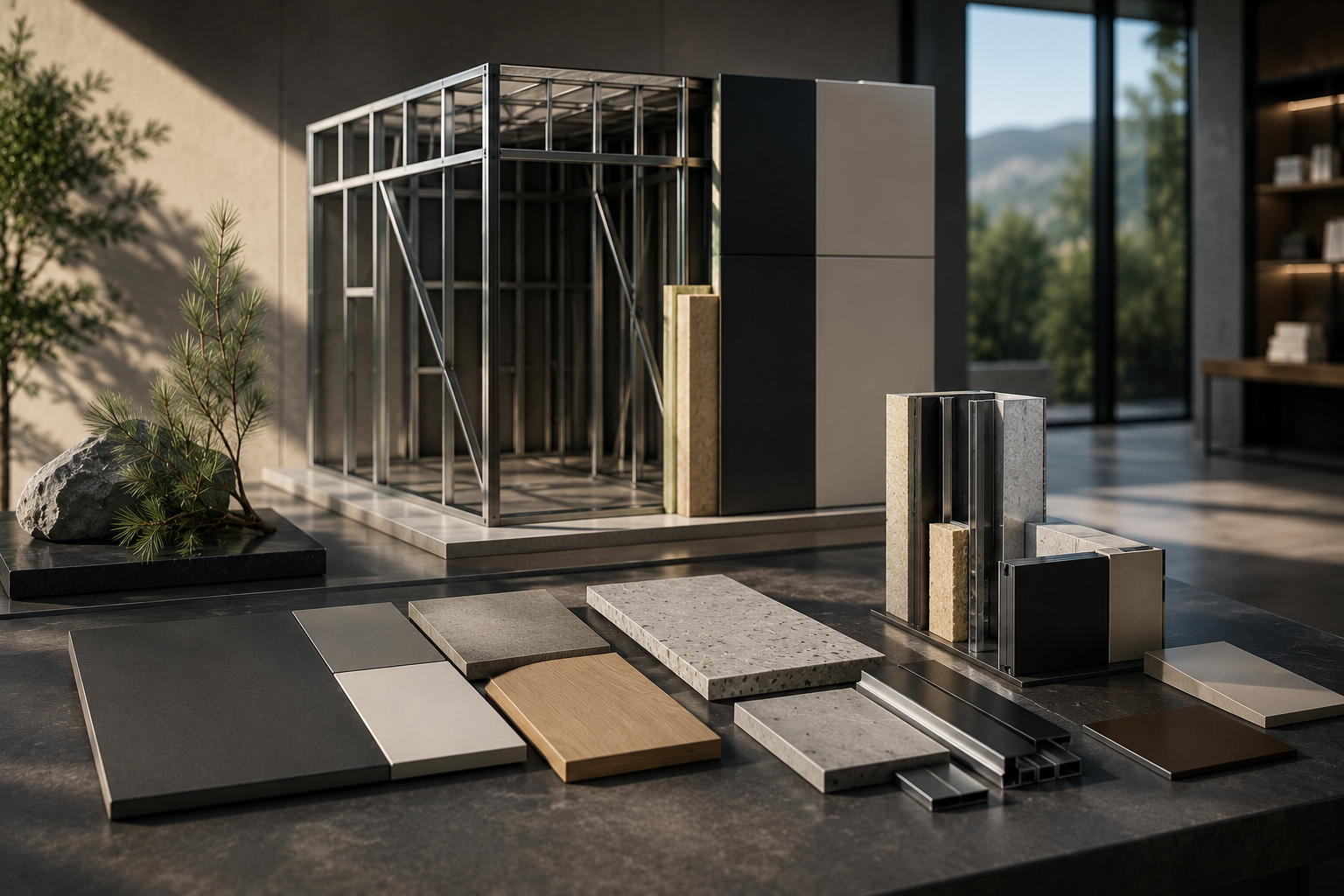
California doesn't treat wildfire risk as an afterthought, and neither do we. Material requirements for wildfire-hardening now live in their own standalone code under the 2025 cycle: the California Wildland-Urban Interface Code, Title 24 Part 7. It covers ember- and flame-resistant roofing, siding, exterior doors and windows, decking, soffits, and vents. On a Karlev home, the assembly is fixed at the plan-set level before it ever reaches a job site.
CALGreen is the floor
Low-VOC adhesives, sealants, and finishes aren't a premium package at Karlev, they're the baseline required under CALGreen, the California Green Building Standards Code, Title 24 Part 11. The same code governs construction waste diversion and water efficiency. Standardizing the material palette at the factory makes code compliance a design decision, made once by engineers, rather than a site-by-site judgment call.
The standard is the premium
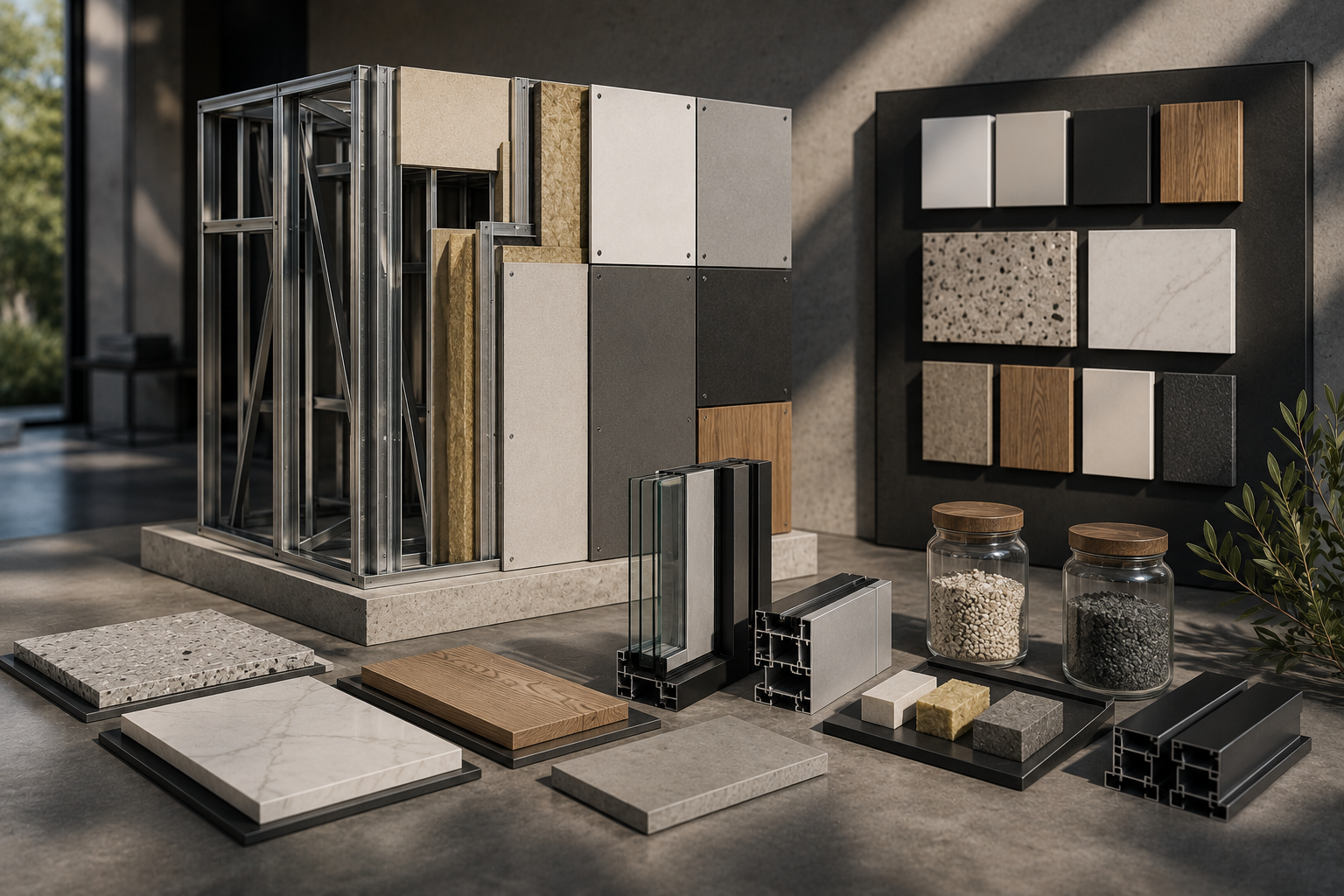
Most builders treat finish quality as a menu, a base package, then an upgrade tier, then a luxury tier. Karlev doesn't work that way. The finish palette we consider standard is, by most builders' definition, the upgrade tier: Vadara Quartz counters and backsplash, Haier stainless appliances, Grohe and Kohler fixtures, smart dimmable LED lighting, and Marvin Elevate patio windows up to 16 feet wide by 8 feet tall. None of it is an add-on.
Upgrades that use the backyard, not just the floorplan
Because the SmartFrame envelope is engineered, upgrades that would be structurally awkward on a stick-built ADU sit inside the same coordinated model here. Private courtyards give a rental tenant real outdoor space without eating the homeowner's yard. The live-in wall turns the ADU into the anchor of the backyard, with an integrated barbecue, seating, storage and family space. Decks and covered porches extend indoor / outdoor living with the same detailing as the unit itself. Interior layouts include a Resource Furniture partnership for dual-purpose pieces, beds that convert to desks or sofas, so a 400 SQFT one-bedroom functions like a much larger space.
Why the factory wins on quality
Standardizing materials at the factory improves quality control and improves durability, because the same tested assembly gets built the same way, every time, instead of being reinvented by whichever crew happens to show up that week. That consistency gets inspected once, at the system level, rather than hoped for on every individual job site.
From our experts
Straight from the Karlev engineering team:
Ready to build together?
Talk with Karlev about bringing this technology to your project.