
One system, always improving
Karlev's R&D team doesn't design a new building for every project. It keeps improving the one system that already spans a compact one-bedroom through a full 1,200 SQFT three-bedroom home.
One system, not a new design every time
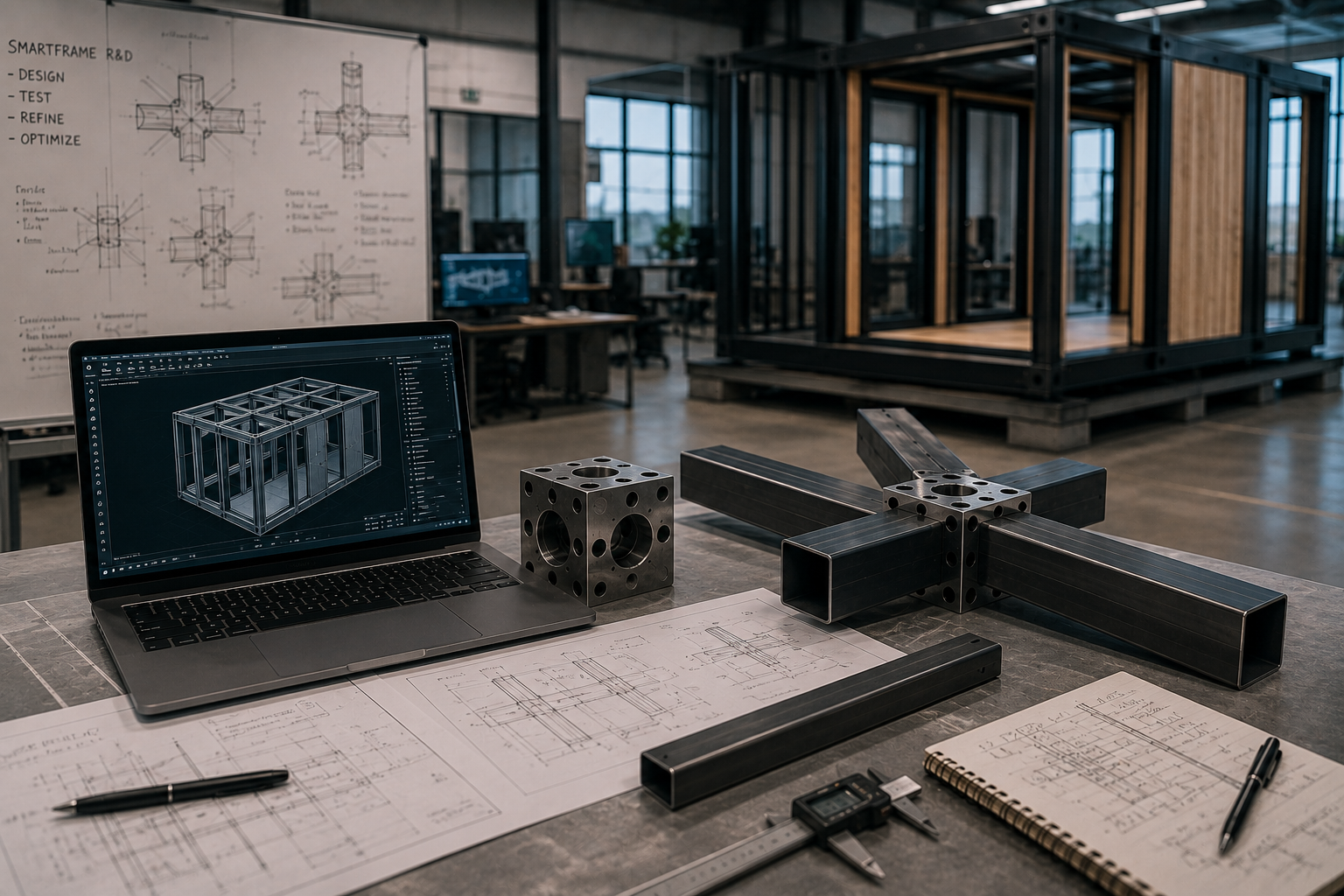
R&D at Karlev starts from a different premise than most homebuilders. Most custom builders treat every project as a fresh design problem, new drawings, new engineering, new unknowns, every time. Karlev works from one engineered platform, SmartFrame, and treats R&D as the ongoing work of making that platform better: stronger connections, tighter tolerances, better thermal performance, faster assembly. The smallest 200 SQFT footprint on the roadmap and the largest 1,200 SQFT three-bedroom home in production share the same structural logic, the same connection details, the same fabrication process.
Testing before trusting
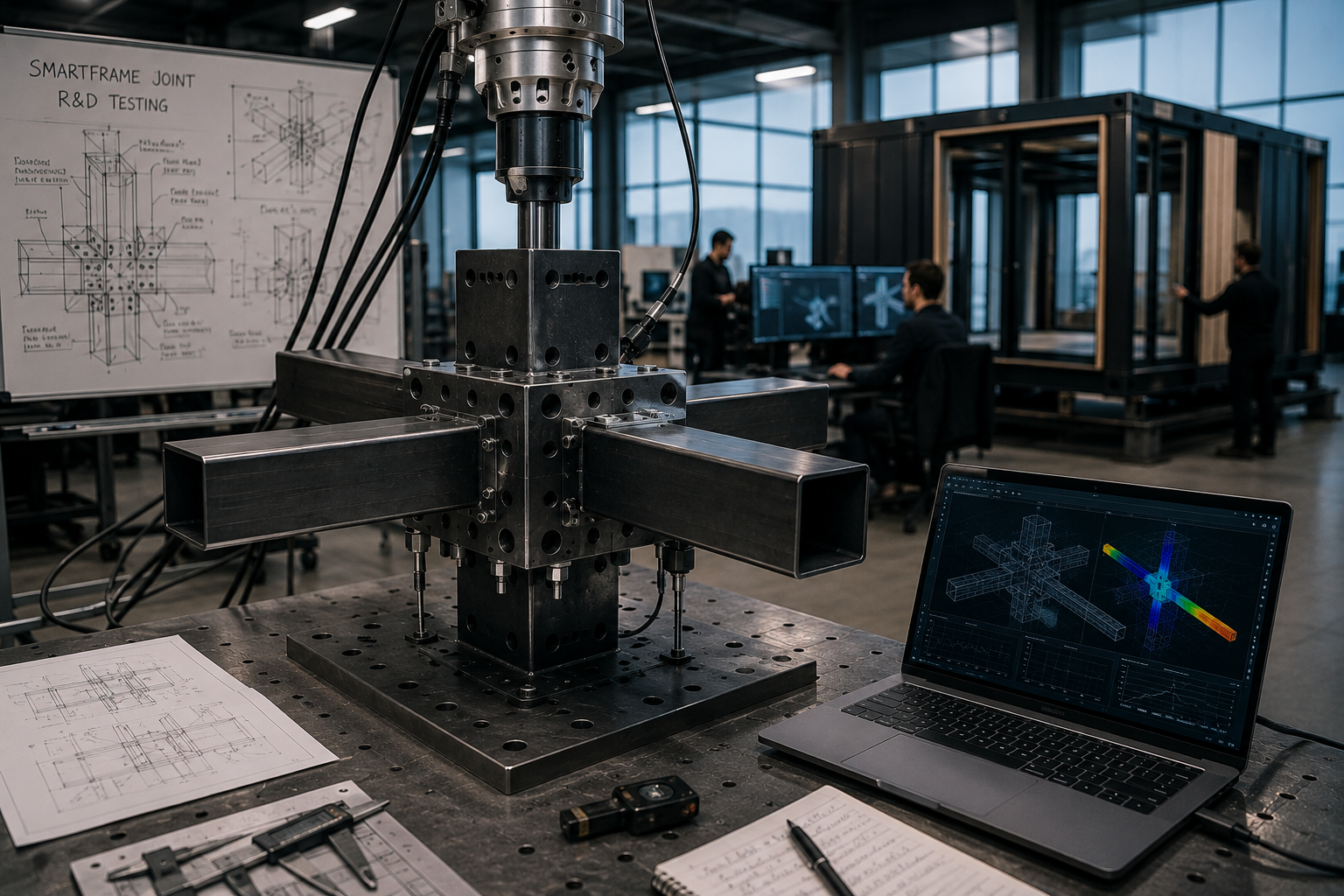
Serious off-site construction R&D runs on the same basic loop as any serious engineering discipline: design a change, build a real test article, measure how it actually performs, then refine and test again. Thermal performance testing looks at how a wall, roof, or floor assembly actually behaves. Structural testing works the same way on the connections and assemblies that hold SmartFrame together. Precision at that level only matters if it's verified under real load, not just modeled on a screen.
From Stereobot to a livable home
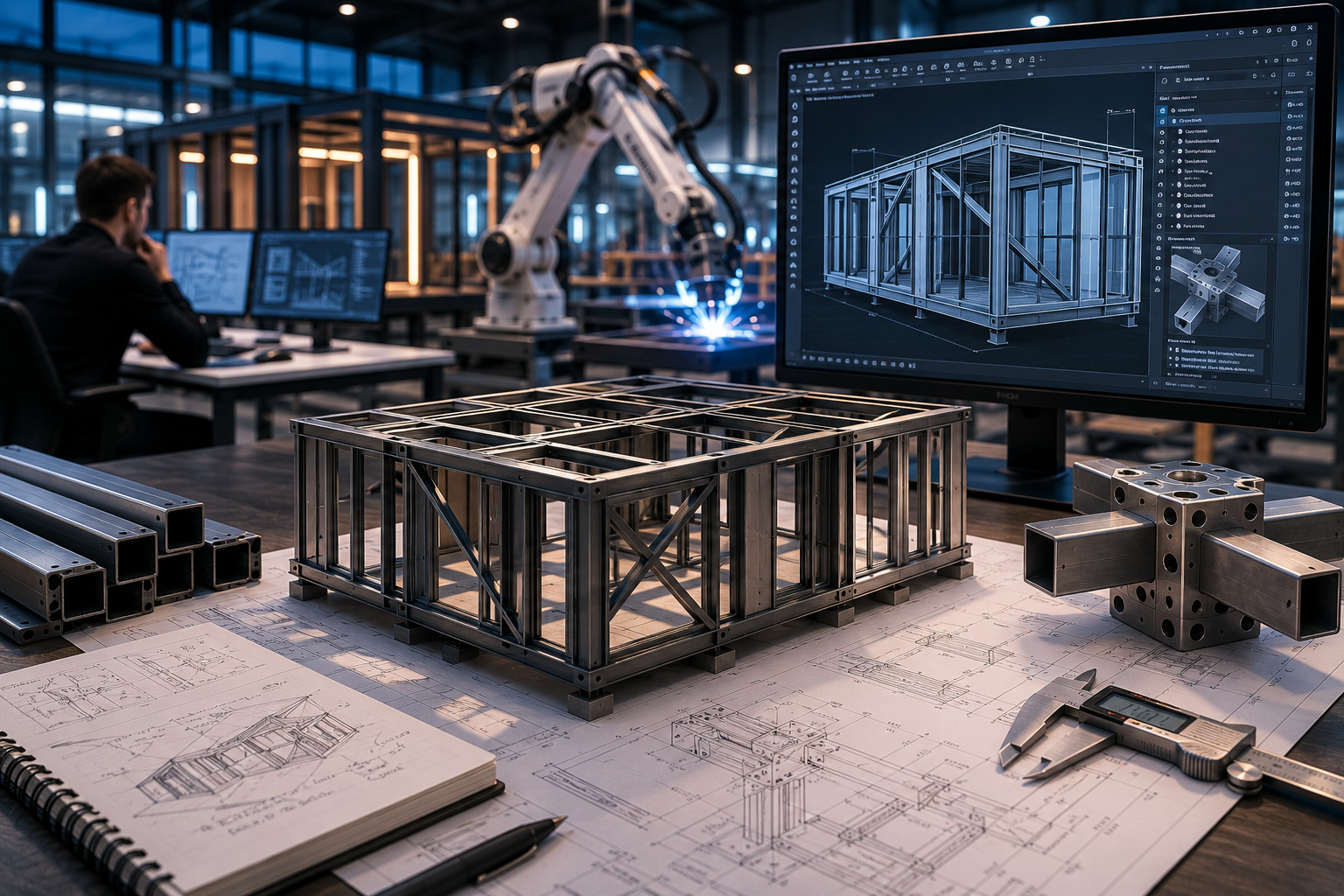
Karlev's engineering lineage runs back further than the company itself. Founder and CEO Alexis Rochas came up through SCI-Arc, one of the more experimental, technology-forward architecture schools in the country, and worked on Stereobot, space-frame research that lived in the academic and experimental world. R&D is the bridge between those two worlds. An interesting structural idea and a permit-ready, mortgage-eligible home are not the same thing, and the distance between them is exactly where serious engineering work has to happen.
Building against a moving target
California doesn't set its building rules once. The state updates its Building Standards Code on a fixed three-year cycle, the 2025 code took effect January 1, 2026. The 2025 California Energy Code is a concrete example of the bar moving. Heat pump water heaters went from an option builders could choose to the prescriptive baseline for new detached ADUs. R&D that only reacts after a code takes effect is already behind. Karlev's approach is to track where the code is heading and have the system ready before the deadline, not after it.
What the field sends back
R&D doesn't only run in a lab or a fabrication shop. Real installed units generate real information, how an assembly performs through a Los Angeles summer and a rainy winter, how a connection ages, where a homeowner notices something the design didn't anticipate. Permitting cycles feed the same loop from a different angle. Friction in permitting is data. It tells R&D where the next revision of SmartFrame should be tightened.
Ahead of the code, not chasing it
A lot of the industry treats code minimums as the target. Karlev's R&D treats them as the floor. Electrification and decarbonization aren't emerging trends anymore, heat pump water heaters as the ADU baseline in the 2025 Energy Code make that plain. The work in front of Karlev's R&D is building envelope performance, solar-ready design, and electrified systems in ahead of the requirement, so that when the next triennial cycle lands, SmartFrame is already there rather than catching up.
From our experts
Straight from the Karlev engineering team:
Ready to build together?
Talk with Karlev about bringing this technology to your project.