
More than one robot builds your home
The joint-welding arm is one machine among many. Behind it: material handlers, automated carts and safety systems that let robots and technicians share the same floor.
A factory floor, not one machine
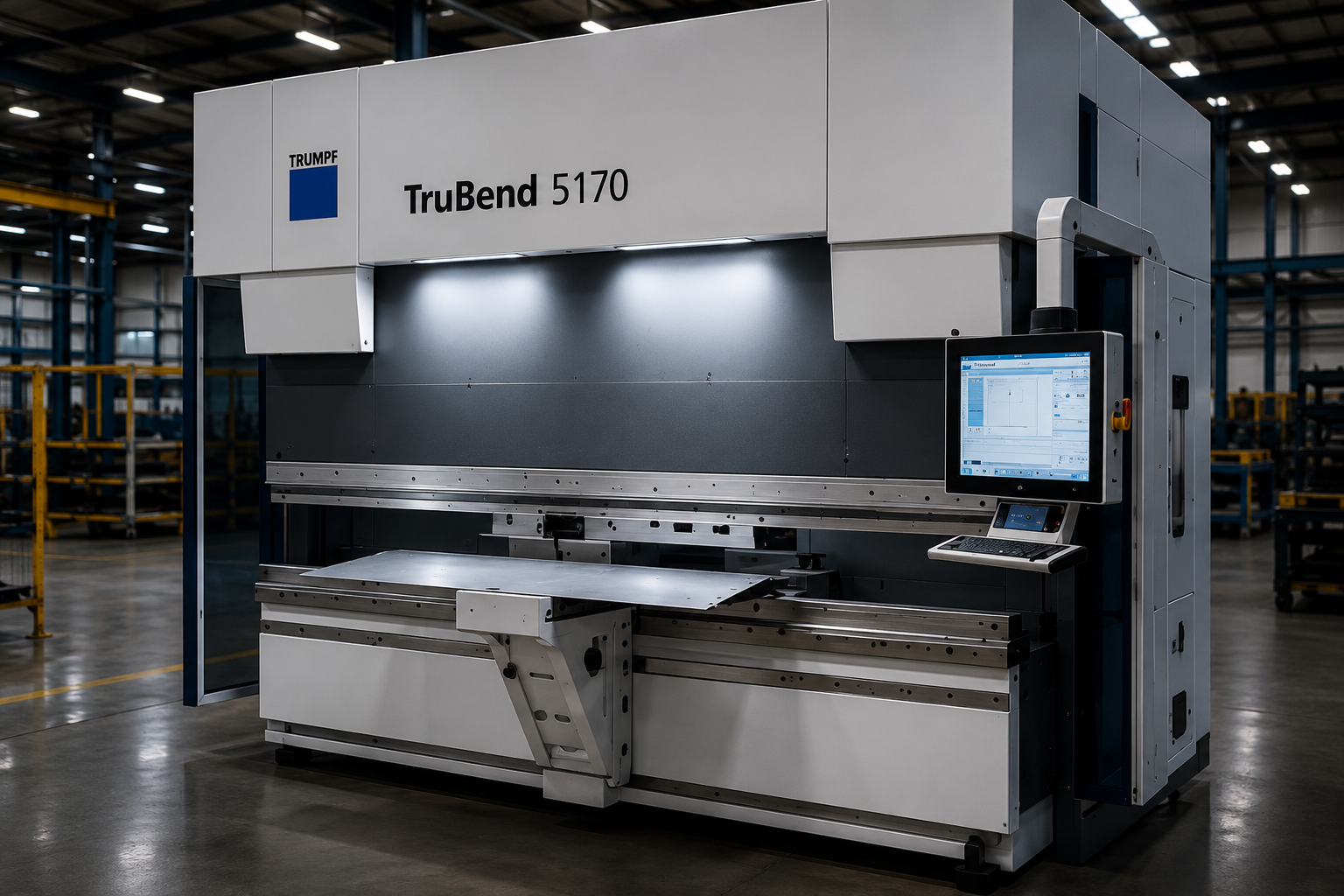
Tour the floor and most people ask about the arm that welds SmartFrame's structural joints. But that machine is one station among many. The story of robotics at Karlev isn't a single device. It's a floor built so that fabrication, material handling and quality checks happen in sequence, each step supported by equipment suited to that specific job. Building houses at volume takes more than one good machine. It takes a system where machines, and the people running them, hand work to each other without losing time or precision along the way.
The 6-axis arm and the aluminum spaceframe
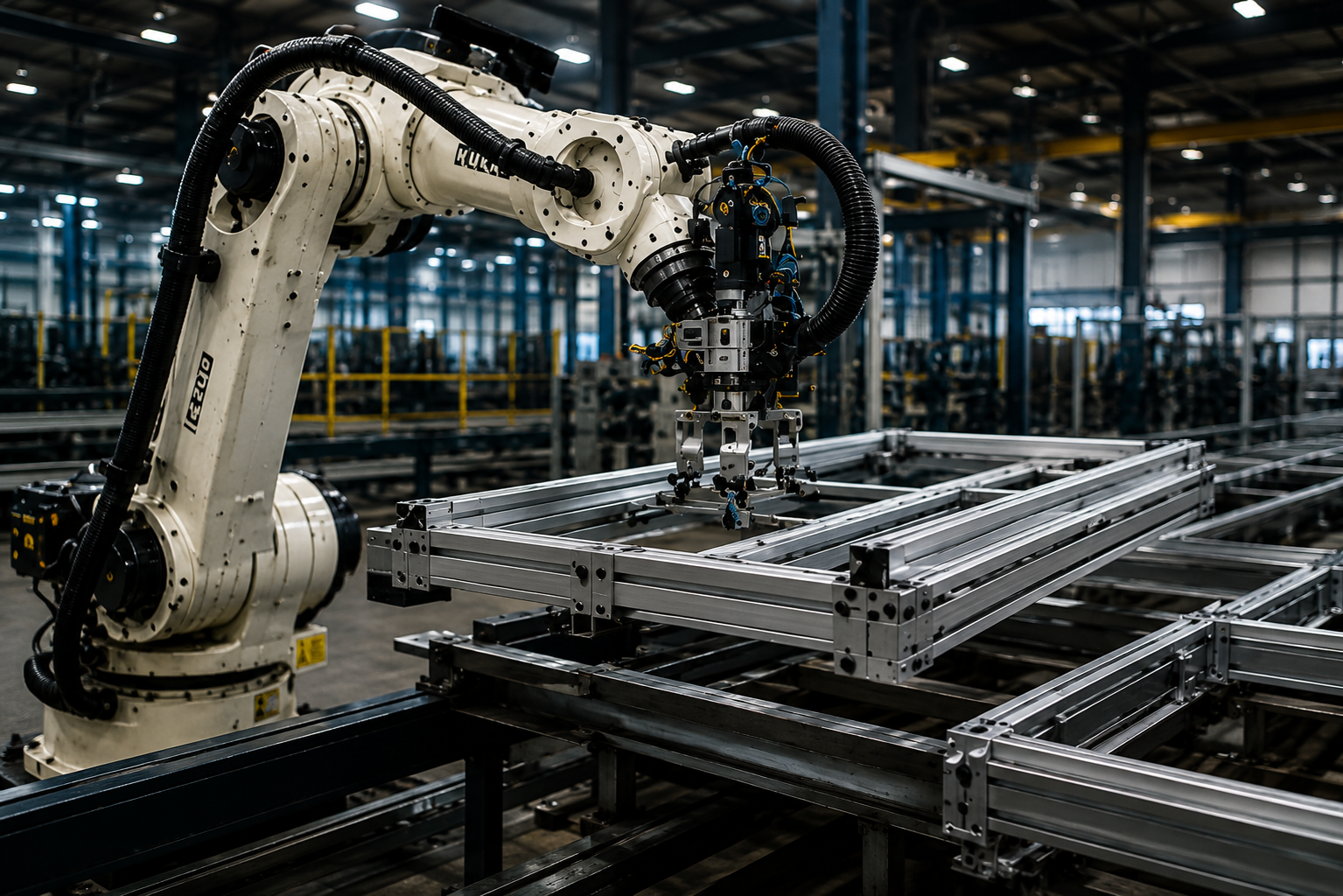
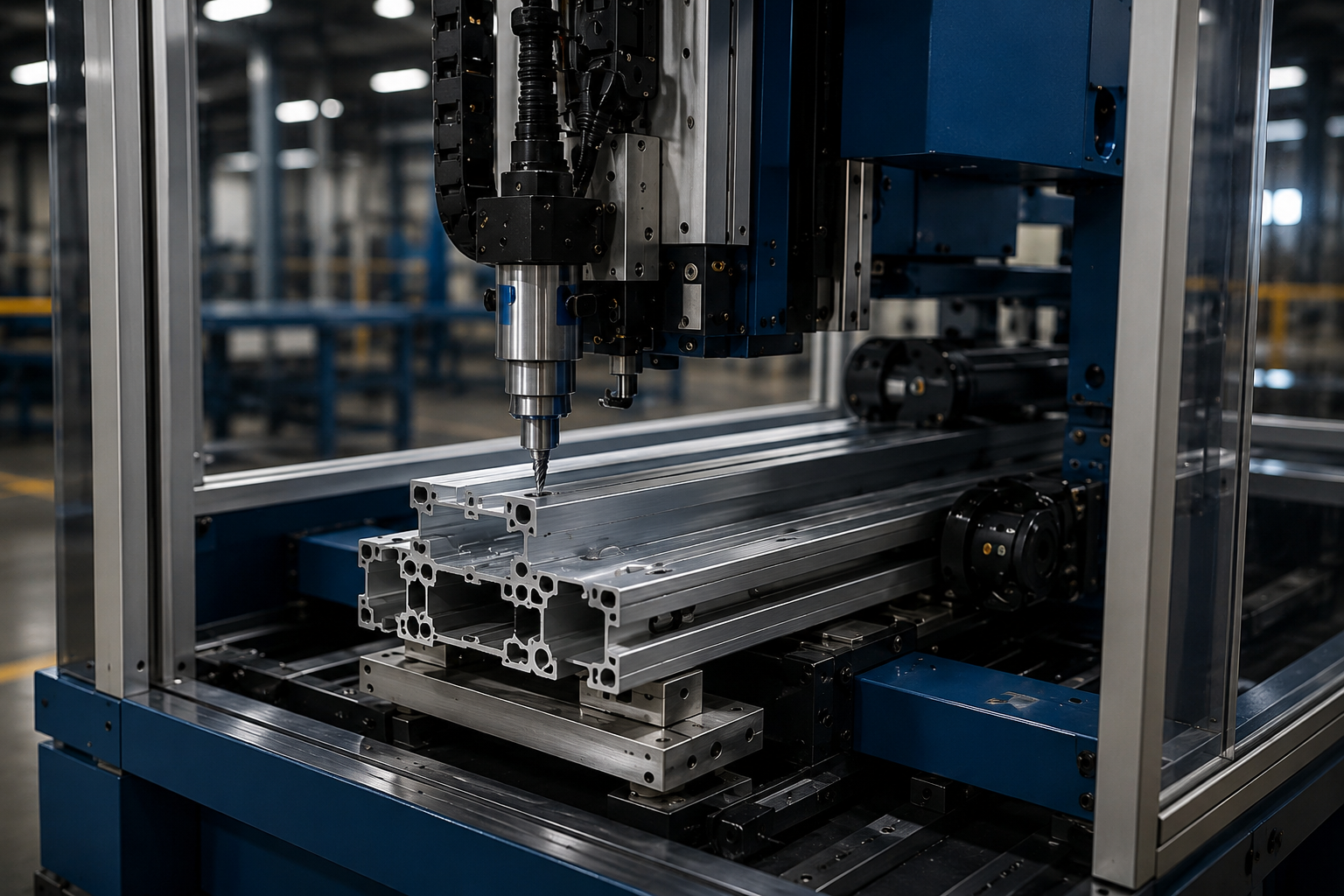
The headline station on the floor is a 6-axis robotic welder fabricating Karlev's patented aluminum spaceframe. Six independently controlled rotational joints give the arm six degrees of freedom, meaning it can rotate around a stationary spaceframe node and approach every connection at exactly the angle the model specifies, without reclamping the part. Aluminum is the right material for this: lighter than steel, precisely weldable at the tolerances the arm holds, and light enough for the finished components to move through a 30-inch backyard opening without cranes.
Getting components where they need to go
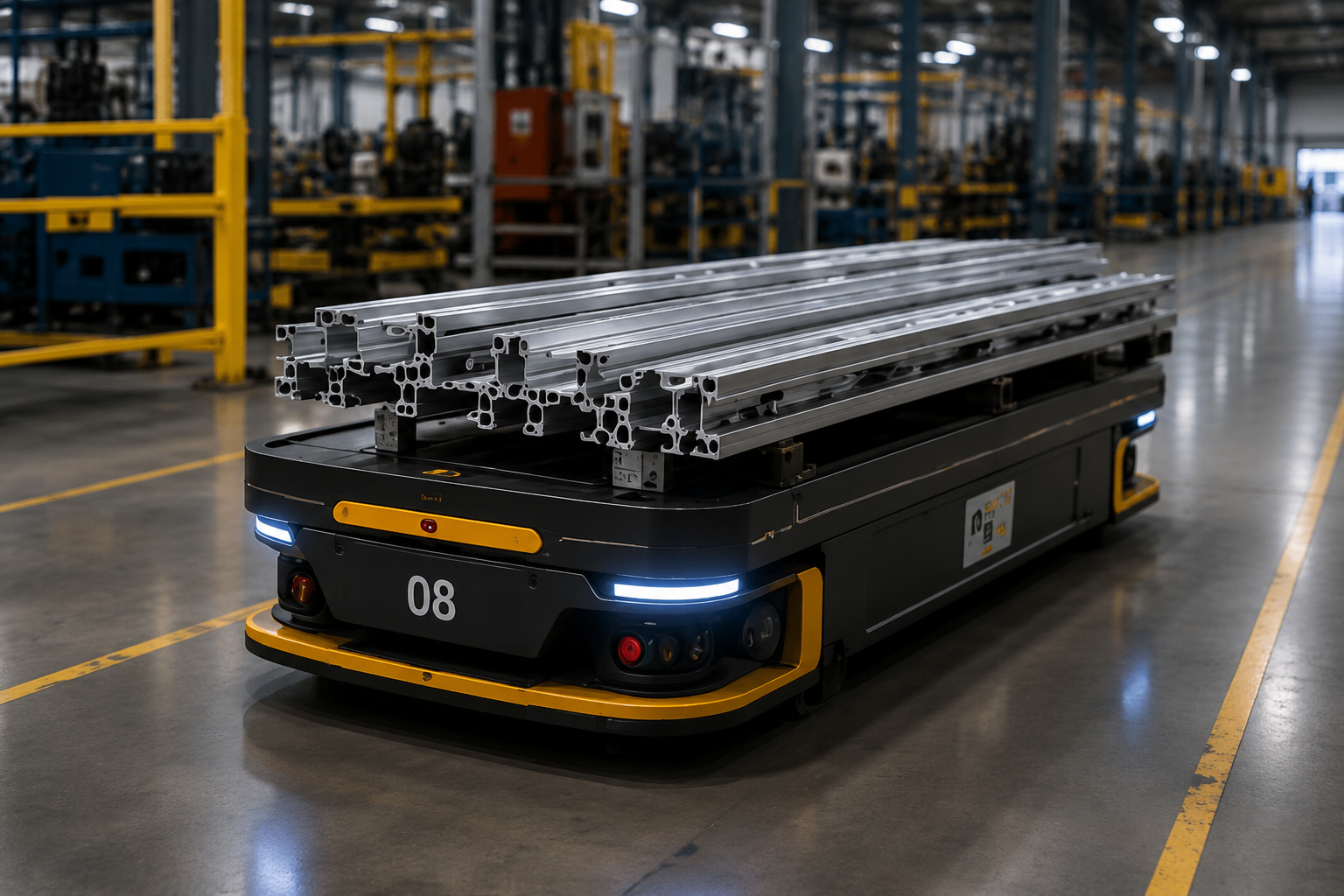
Building a house off-site means moving a lot of material through a compact footprint, over and over, all day. That's where material-handling robots and automated guided vehicles, or AGVs, come in. These are the workhorses of a modern factory floor: wheeled units that carry components from one station to the next along a set path, freeing technicians from repetitive lifting so they can spend their attention on assembly, fit and finish. What's notable isn't the novelty of the technology. It's that a homebuilder is using it at all.
Working side by side, safely
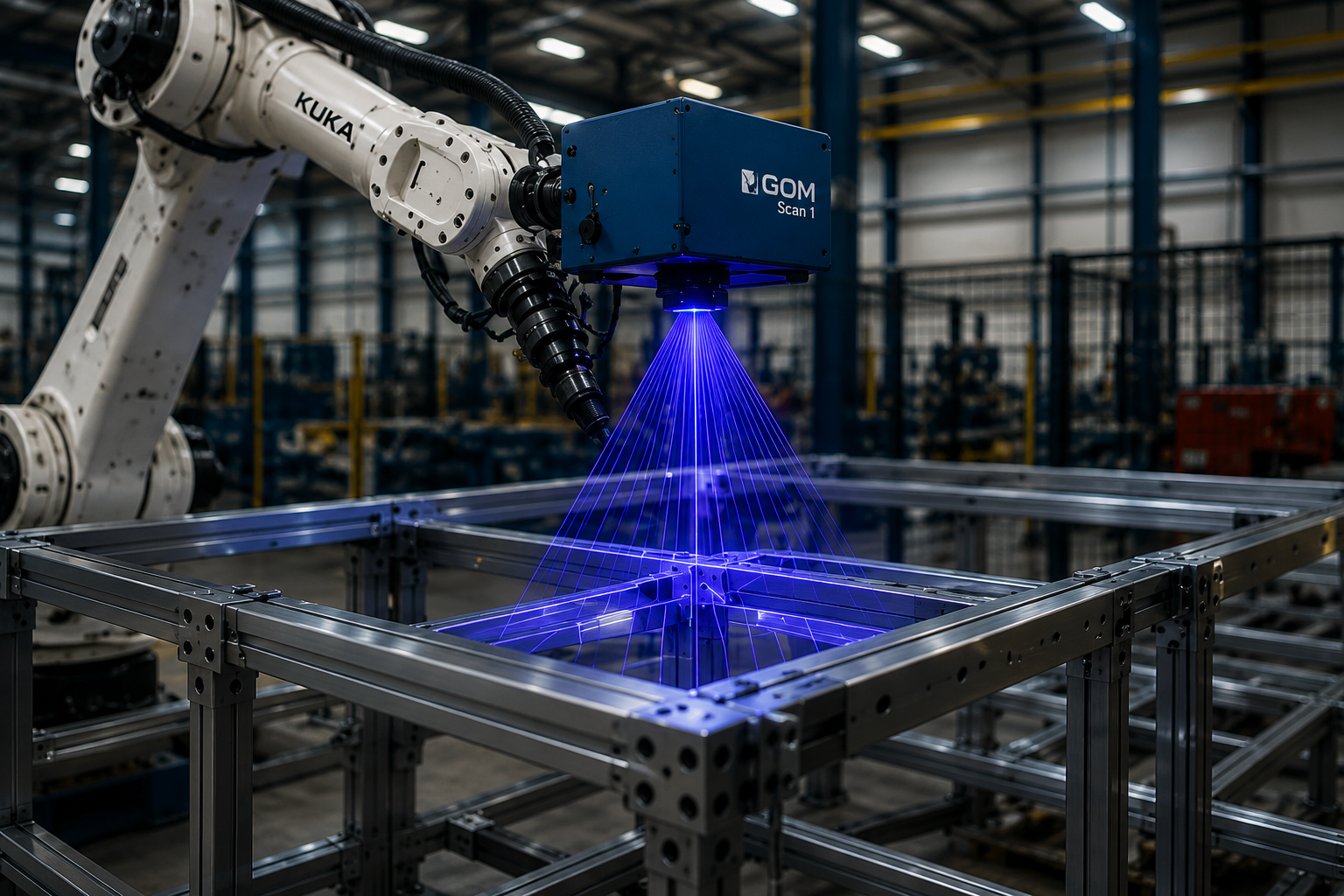
A lot of modern factory automation, including collaborative robots, or cobots, is designed to share a workspace with people, not just perform a task nearby. That takes real safety engineering, not a policy on paper. The result on our floor is a mix, not a hierarchy. Machines handle the repetitive, heavy or exacting parts of the job. Technicians handle the parts that need eyes, hands and judgment. Safety systems are what let both happen in the same space, at the same time, without one having to wait on the other.
An old idea, applied to a new industry
Automotive assembly lines have run on robotics for decades. Electronics, aerospace and appliance manufacturing followed similar paths, each industry automating the tasks that rewarded precision and repetition. Residential construction has been the outlier. Karlev's factory takes a different starting point: build the house like a manufactured product, in a controlled facility, and the same robotics playbook that transformed other industries starts to apply. We didn't invent factory automation. We applied a well-proven industrial lineage to a category, home building, that had mostly sat outside it.
Deciding what a machine should do
Not every task on the floor is a candidate for automation. Tasks that move to a machine tend to be repetitive across every unit, precision-critical, or physically taxing. Tasks that stay with people require judgment, adaptability, or fine motor problem-solving. This isn't robots replacing people. It's a deliberate allocation: give the machine what it's suited for, keep the person on what they're suited for.
From our experts
Straight from the Karlev engineering team:
Ready to build together?
Talk with Karlev about bringing this technology to your project.