
Every unit, built the same way
Karlev units are built on an automated indoor line, not a job site crew waiting on the weather. That is what makes half-millimeter tolerance, safer working conditions, and a factory that runs while your permit is still in review all possible at the same time.
Inside the line, not on the job site
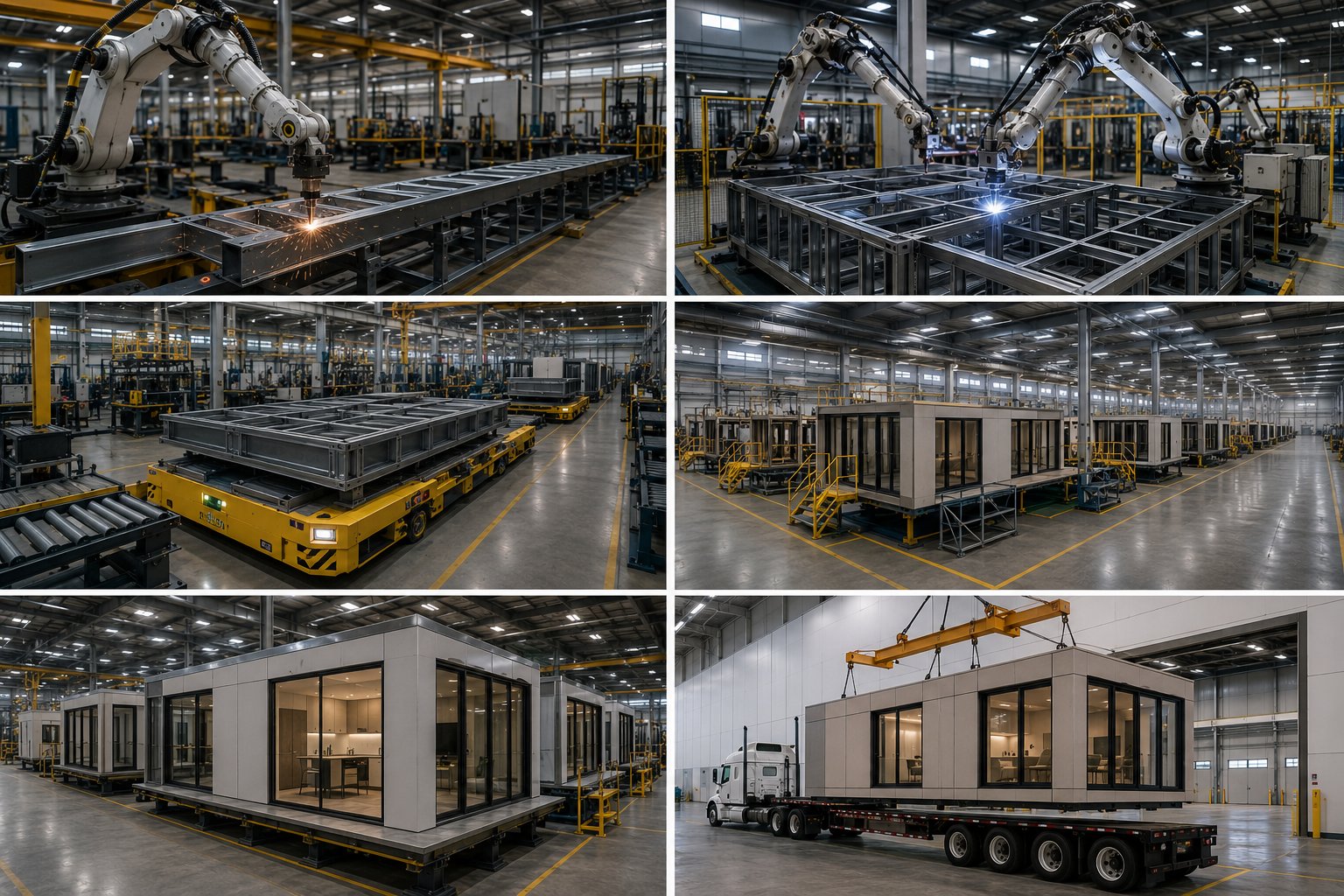
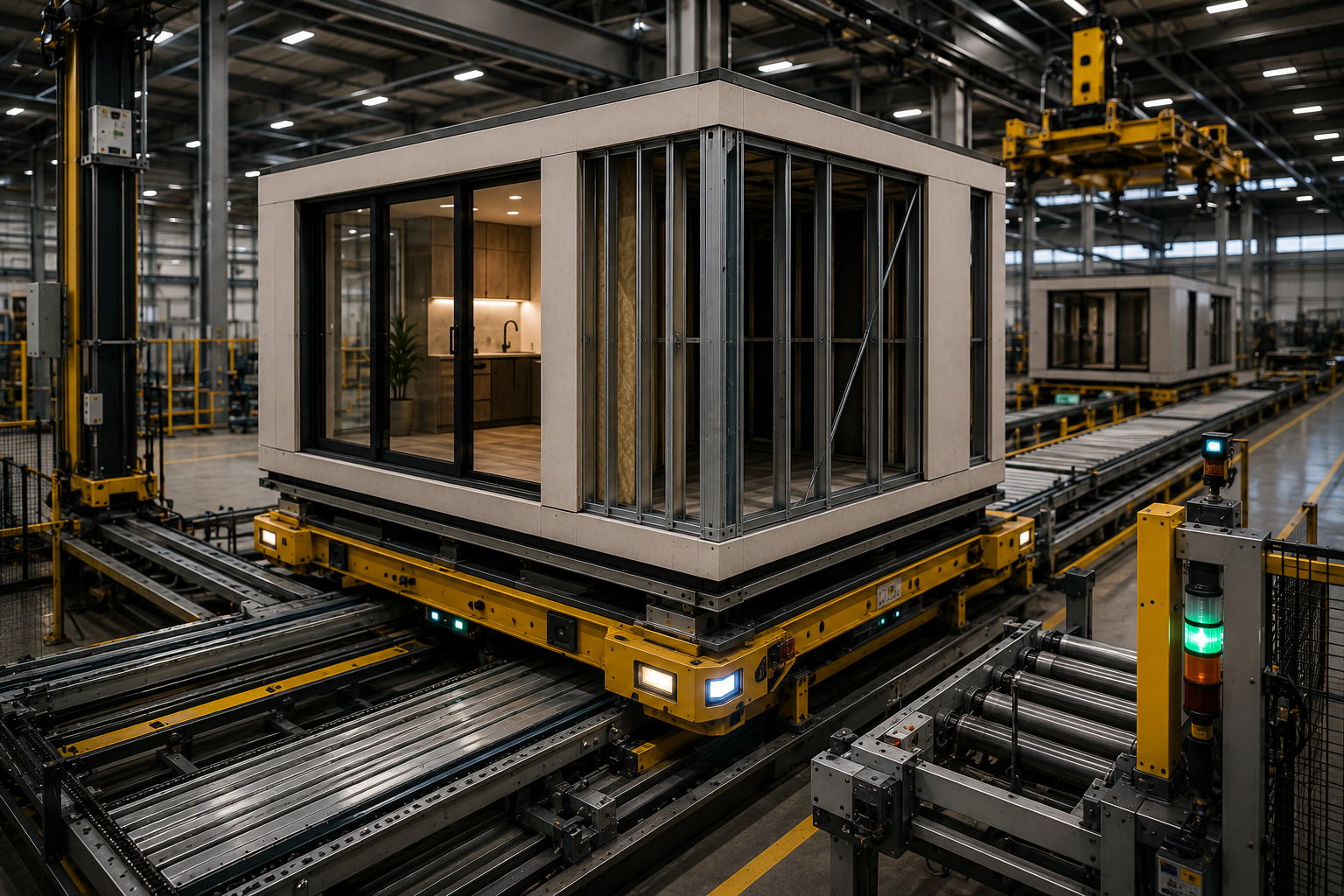
Most ADU construction happens outdoors, on a job site, at the mercy of whatever the day brings. Karlev builds differently. Our units are fabricated on an automated production line, indoors, in a controlled environment where temperature, tooling, and sequence don't change from Monday to Friday or January to July. Nothing about the process depends on the weather forecast.
Building in parallel with the permit clock
California law caps ADU permit review at 60 days. On a traditional job, it is still 60 days where nothing gets built. Karlev doesn't wait. In cases where the plans allow, prefabrication of the aluminum spaceframe and finished panel assemblies begins while permits are still in city review, so the unit is already well into production when approval clears. An automated line can run your unit on a fixed production schedule the same week it is running several others, in parallel. The result: no lag between permit approval and construction start, and total customer timeline held to 6 to 8 months from Discovery to move-in.
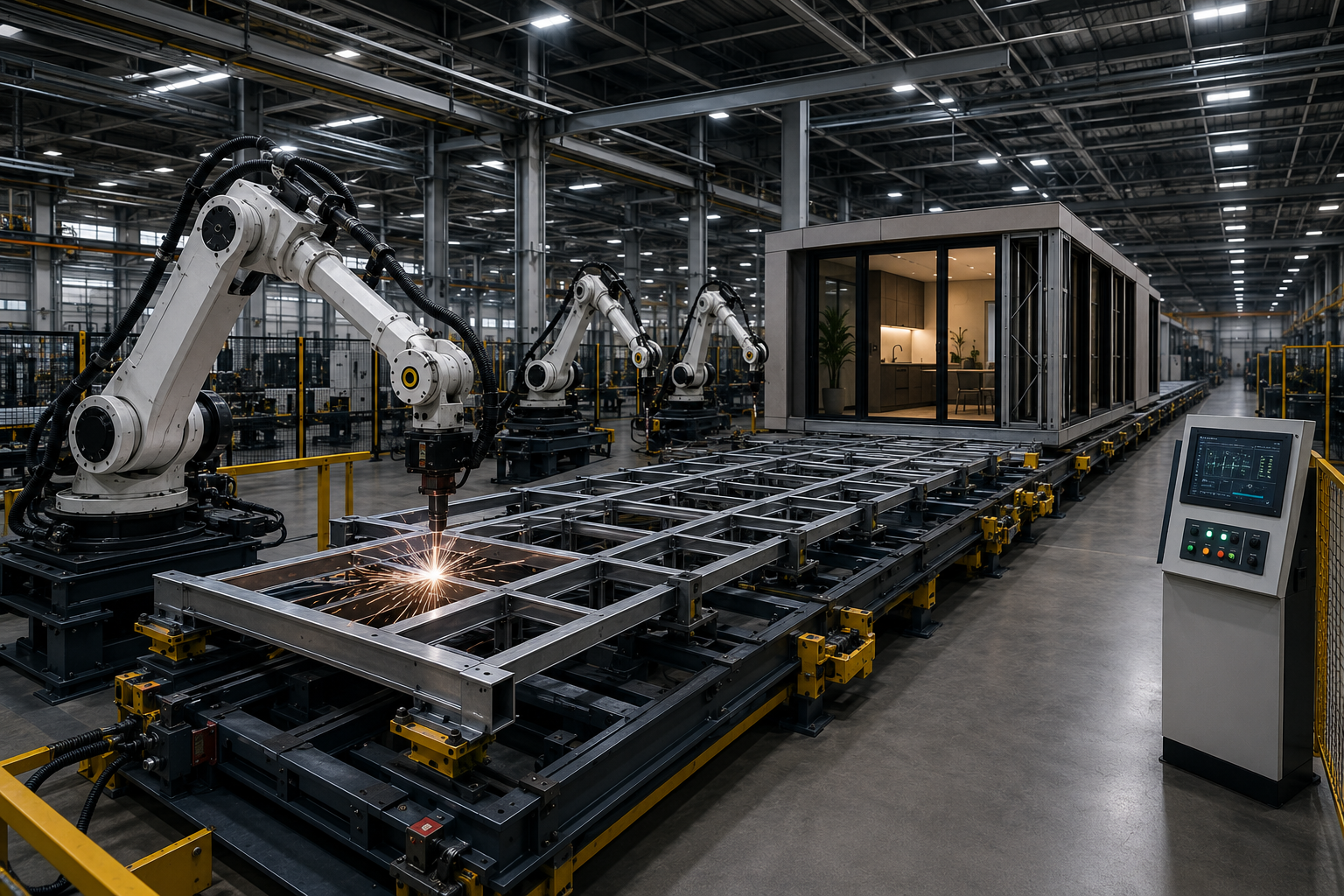
The line, stage by stage
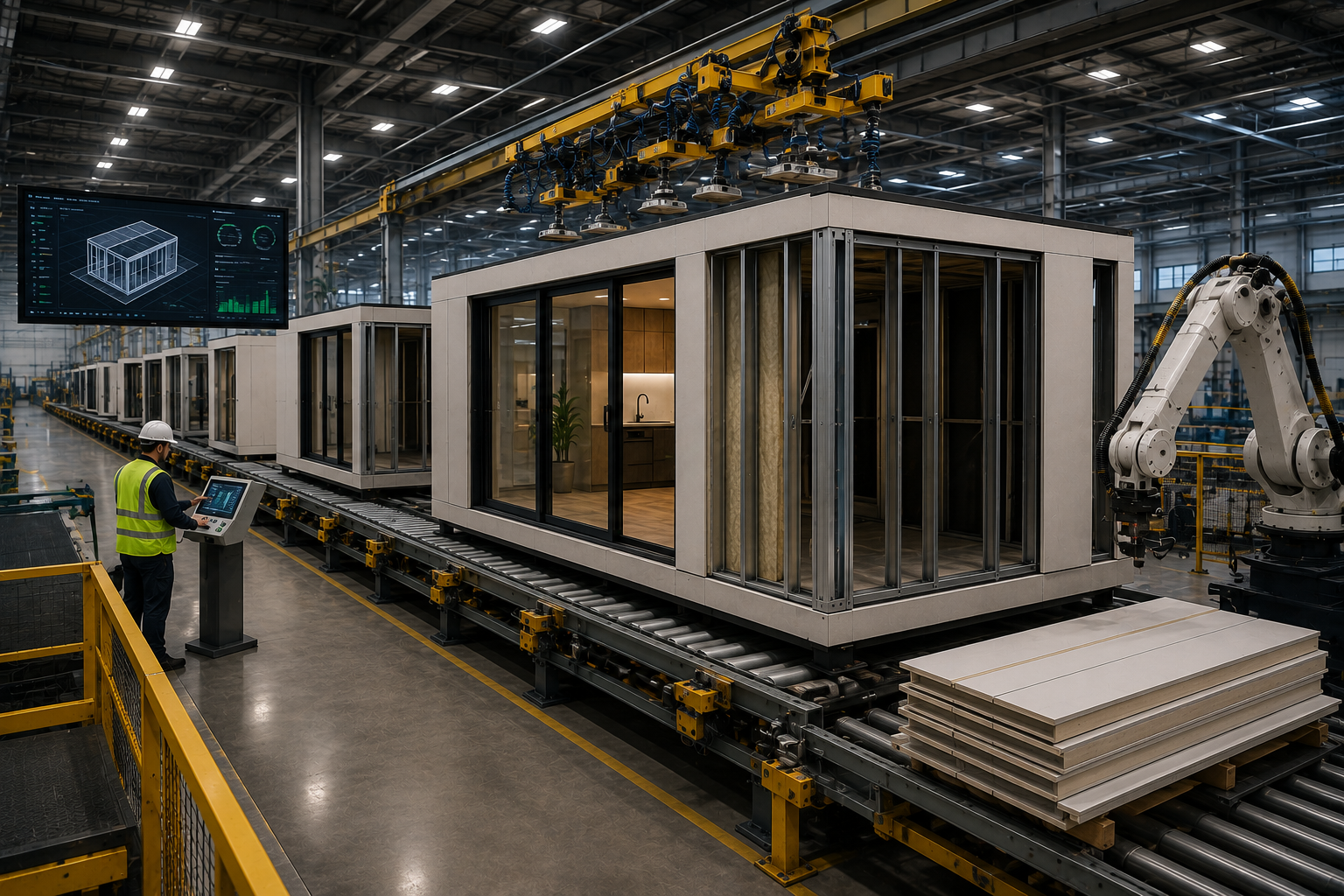
A Karlev unit doesn't move through the factory as one project worked start to finish by a single crew. It moves through defined stages, each staffed and tooled for one job. Automated handling moves the unit between stages on a set sequence, so each team works the same station, the same tooling, the same checklist, on every unit that comes through.
Same result, every time
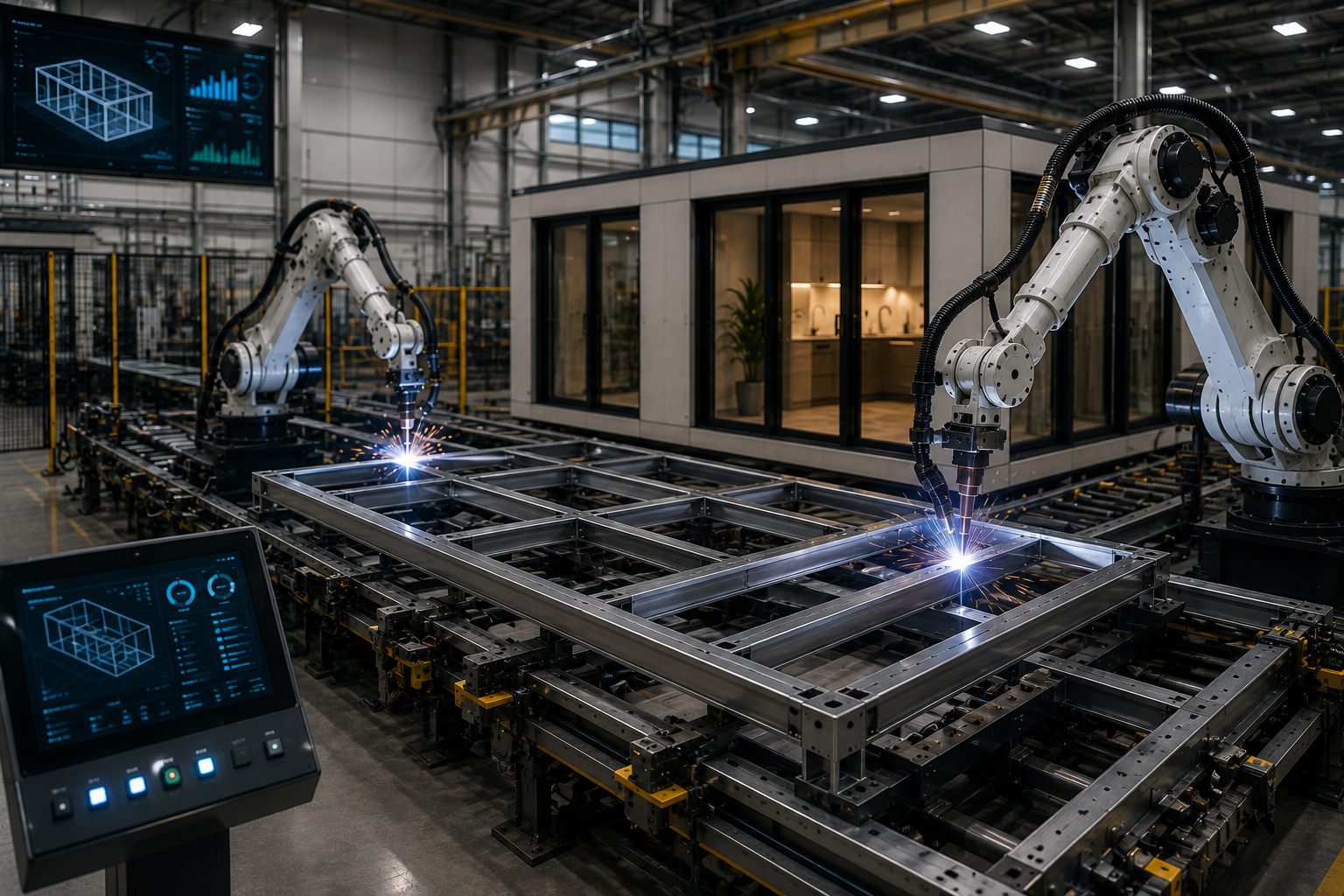
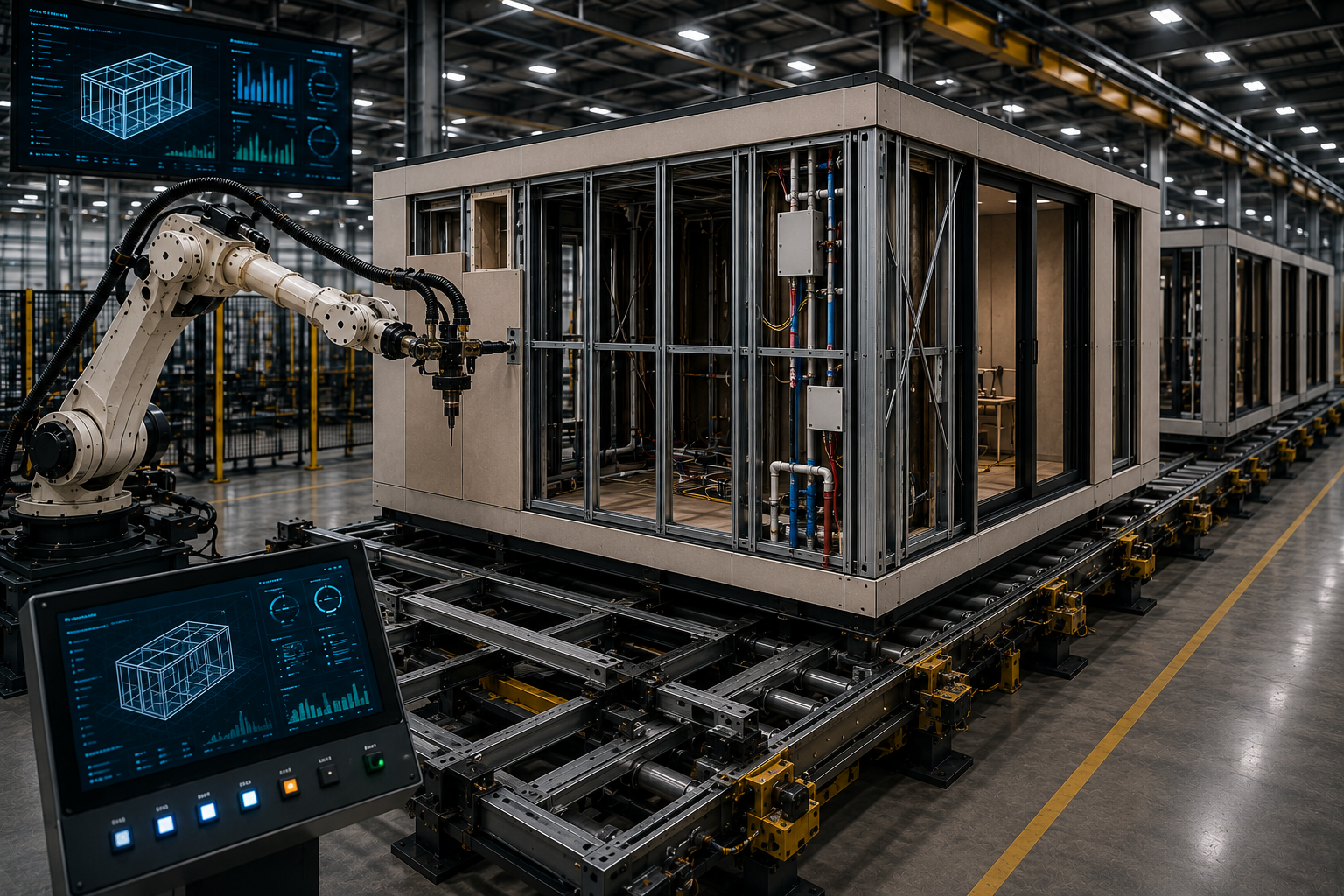
A robot performs an operation exactly the same way on unit one and unit five hundred. It doesn't get tired at the end of a long day, doesn't rush before a weekend, and doesn't hold a weld or a cut slightly differently than it did that morning. For a homeowner, that consistency shows up in ways you can feel even if you never see the factory floor: panels that align the way they were drawn, systems that were rough-in the same way as every other unit, and a finish quality that isn't a function of which crew showed up that week.
Safer work, on and off the line
Karlev's factory line automates the operations that are hardest on workers: the heavy material handling, the repetitive structural welds, the high-precision cuts. That doesn't remove people from the process, it changes what they do. Factory technicians operate, monitor, and quality-check automated systems instead of absorbing the physical toll of doing the same heavy task by hand, over and over, in conditions no one controls.
Built for what California is asking for
Under Title 25 of the California Code of Regulations, structures like Karlev's require plan approval from HCD and in-plant inspection before they carry an insignia of approval. The 2025 California Building Standards Code holds off-site and modular construction to the same structural, energy, and fire performance standards as anything built on a traditional job site. Automation doesn't change what the code requires. It is the reason Karlev can hit that standard the same way, on every unit.
From our experts
Straight from the Karlev engineering team:
Ready to build together?
Talk with Karlev about bringing this technology to your project.