
Precision, to the millimeter
Every joint, panel, and connection in a Karlev SmartFrame is fabricated to ±0.5mm tolerance, tighter than a few sheets of paper. That's not a spec-sheet flourish. It's the reason our homes go together in weeks, not months.
What ±0.5mm actually looks like
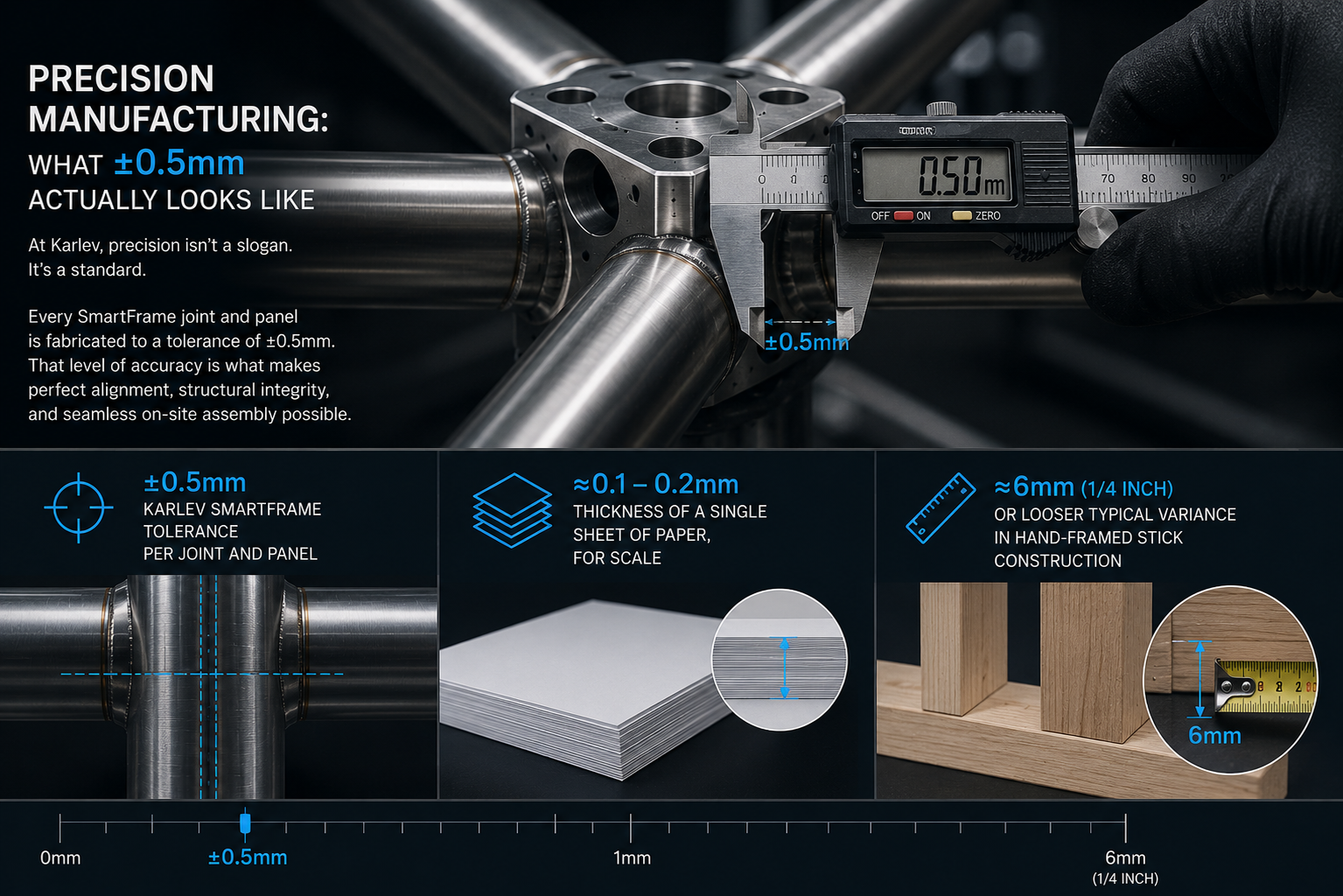
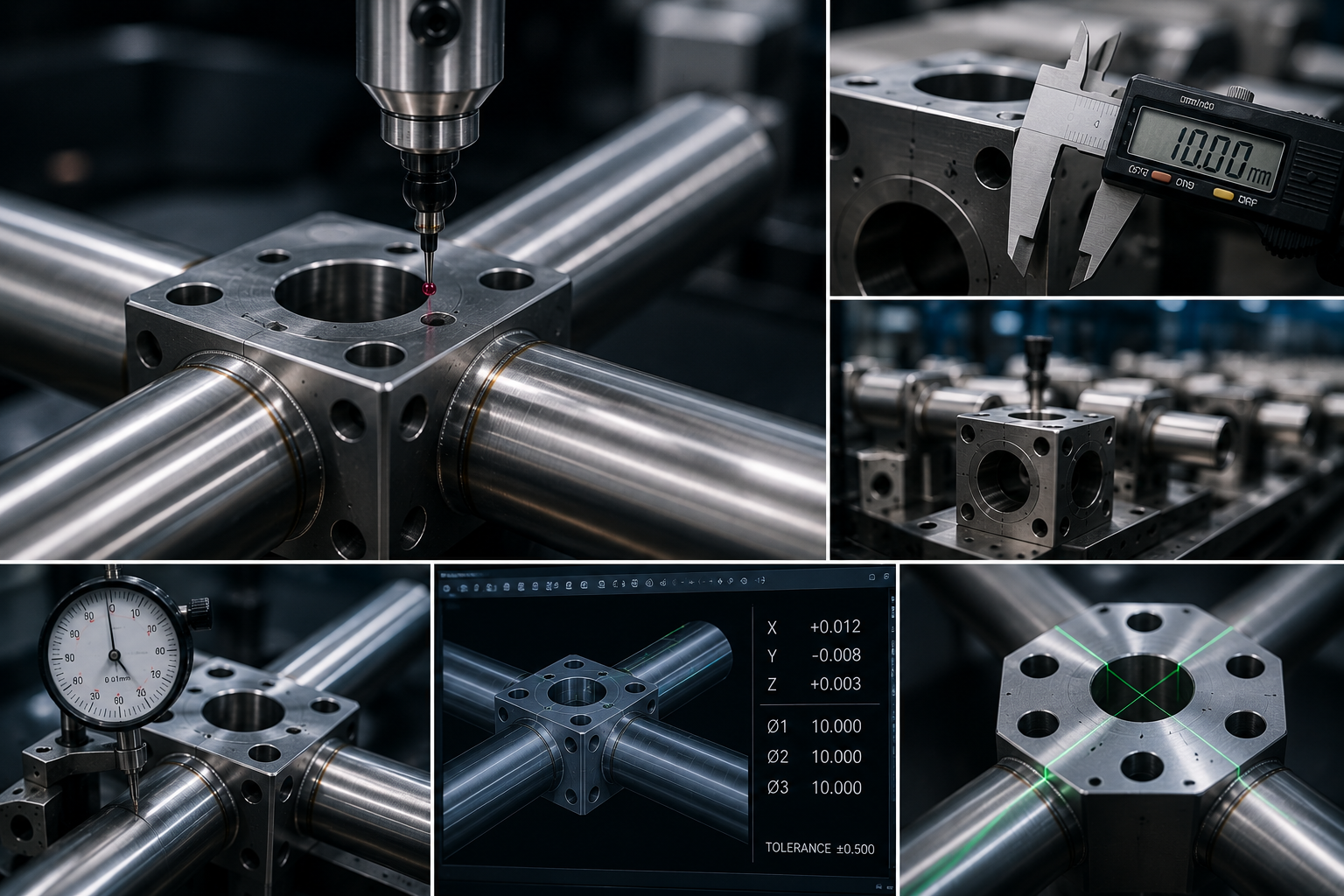
Precision manufacturing, for Karlev, isn't a phrase on a brochure. It's a number: every structural joint, every panel, every connection point in the SmartFrame system is fabricated to a tolerance of ±0.5mm. Half a millimeter is roughly the thickness of two or three sheets of ordinary paper stacked together. Conventional field framing works in fractions of an inch, a stud wall considered acceptably square within a quarter inch is normal. A quarter inch is roughly 6mm, more than ten times the tolerance window we hold on a single connection.
Jigs, fixtures, and repeatable setups
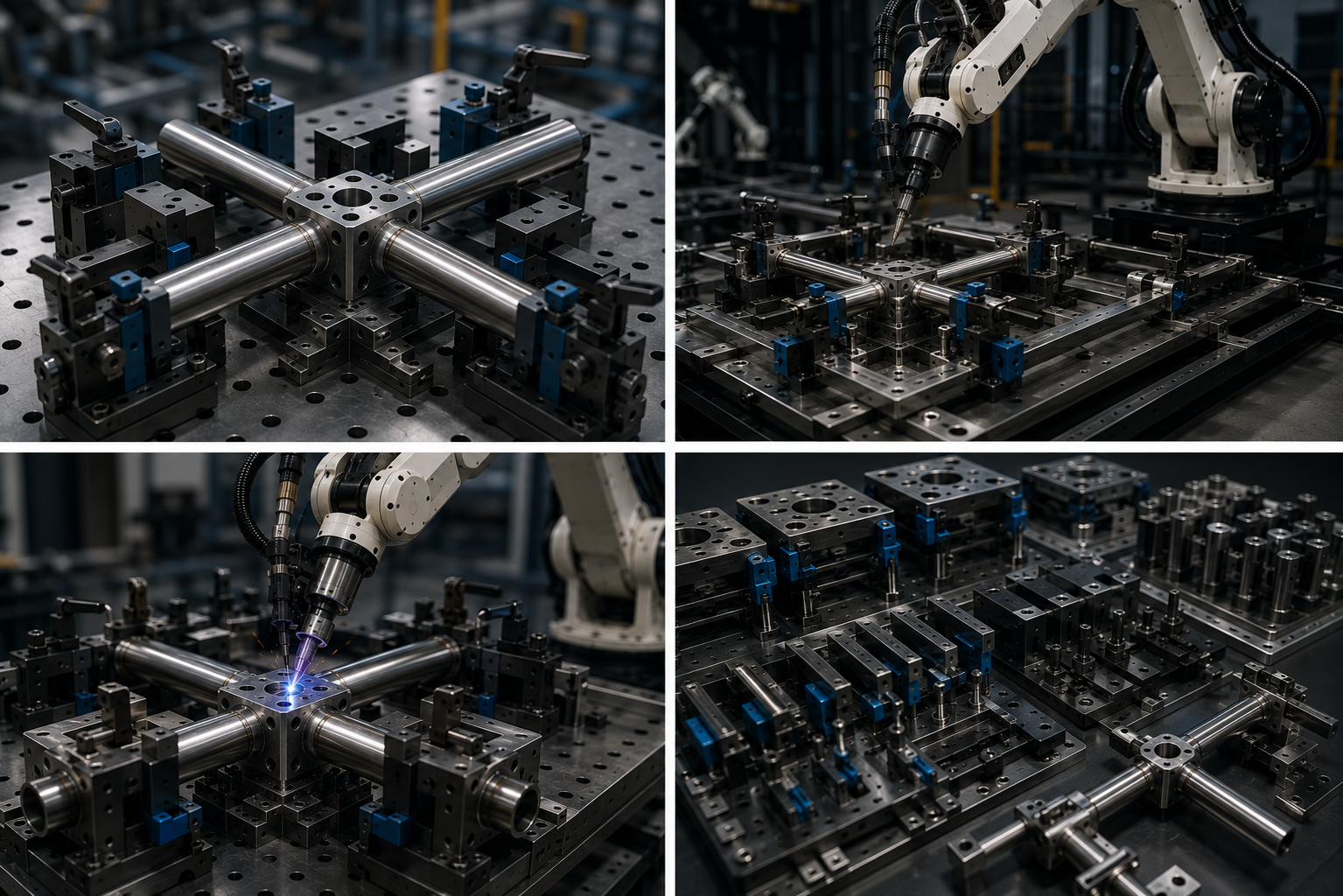
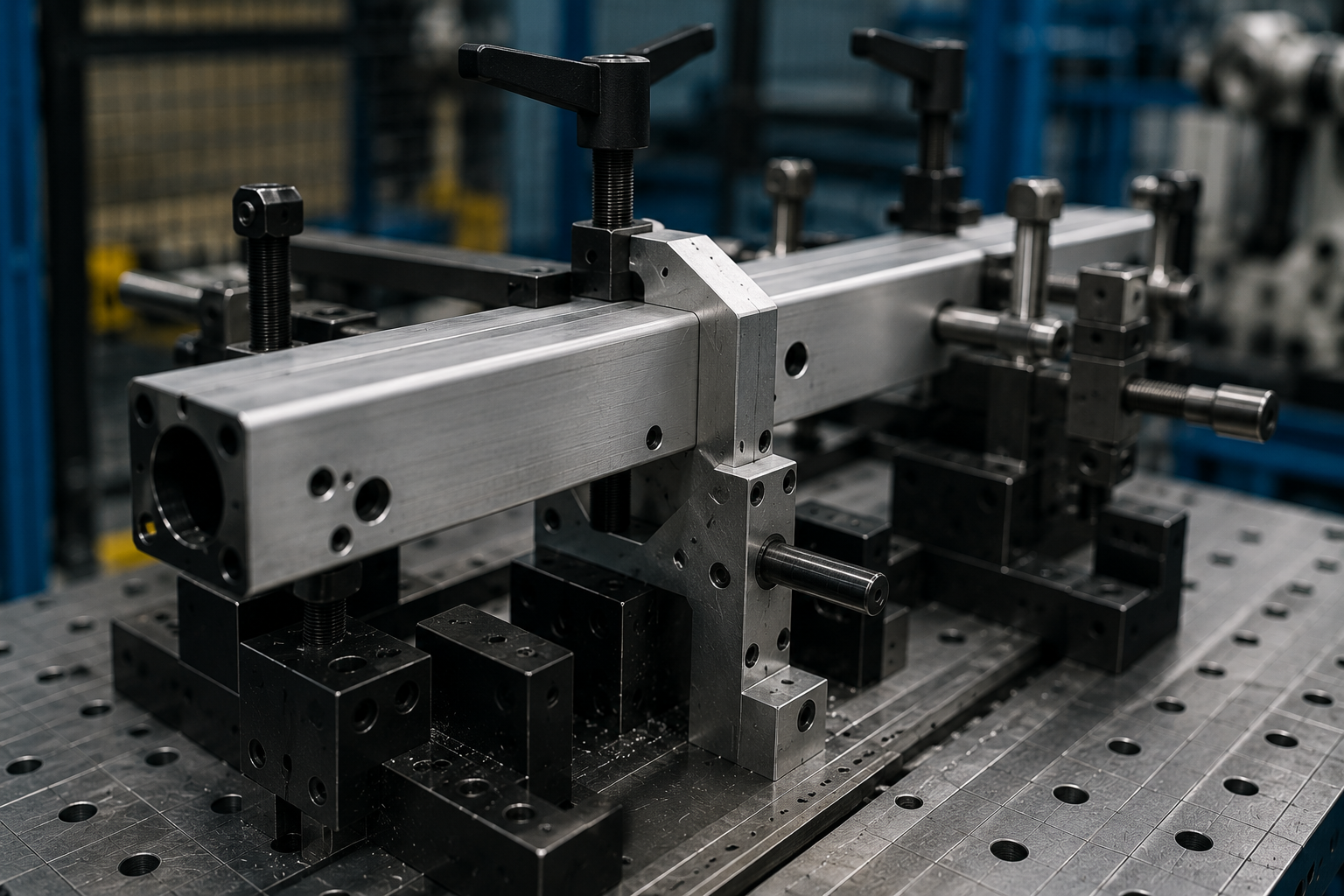
Precision like this doesn't come from a skilled worker measuring carefully and cutting once. It comes from taking human variability out of the loop entirely. Material is held in a fixed jig or fixture that positions every part in the exact same location, every single time. Karlev's frame components are cut and formed by 6-axis robotic tooling, referencing the same digital coordinate system as the approved model. There's no tape measure, no pencil mark, no 'that looks about right.'
Why it matters on-site, not just on paper
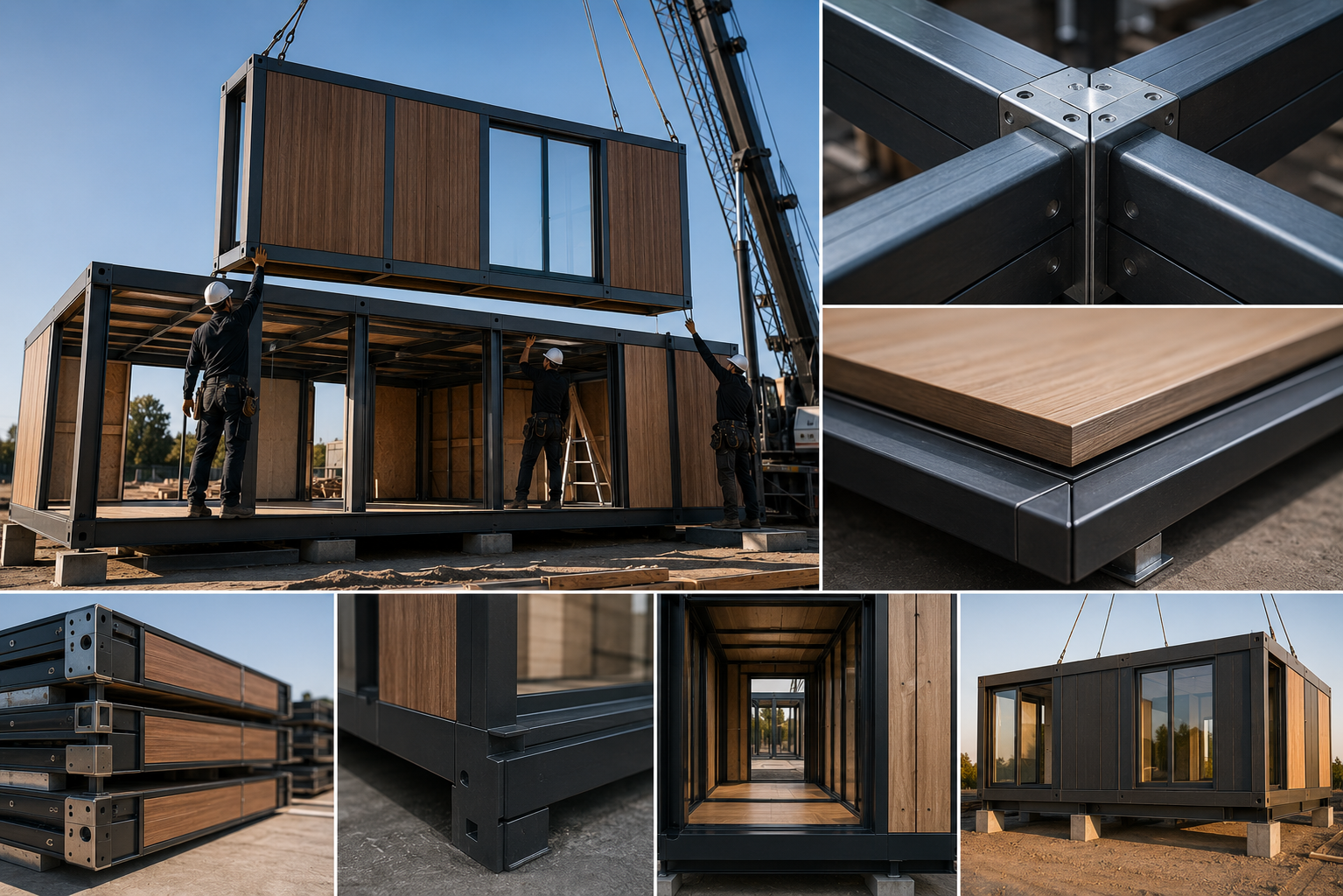
When panels and structural connections are fabricated to fit exactly as designed, the crew assembling them on-site isn't fixing anything. There's no field cutting a panel down because it arrived a half-inch long. No shimming a connection because two pieces don't quite meet. That's the practical meaning behind 'zero field modifications.' Assembly becomes a sequence of connections that were engineered to go together, not a series of small on-site corrections disguised as installation. This is a meaningful part of why a Karlev ADU can be assembled on-site in as little as four weeks.
Tighter fit, better envelope
A thermal envelope is only as good as its weakest seam. A gap of even a few millimeters at a panel joint is a path for air infiltration and a thermal bridge, undermining the insulation value the design assumed on paper. Karlev's as-built envelope, R-24 exterior walls, R-41 roof under insulated metal panels, and Marvin Elevate double-pane argon-filled low-E glazing, is engineered to a continuous, gap-free spec. That spec only delivers in practice if the structure underneath is actually built to the tolerance the design assumed. The 2025 Title 24, Part 6 Energy Code raises the bar on envelope performance, and precision at the joint is what carries the modeled number through to the finished building.
How we verify it
Precision that isn't checked is just a claim. Every SmartFrame component is measured against the approved digital model as part of the fabrication process, dimensional checks that confirm what came off the line matches what was designed. California's Factory-Built Housing Program formalizes a version of this at the state level: it requires in-plant inspection verifying that units are built to the manufacturer's approved quality control program and match approved plans exactly.
The time precision buys back
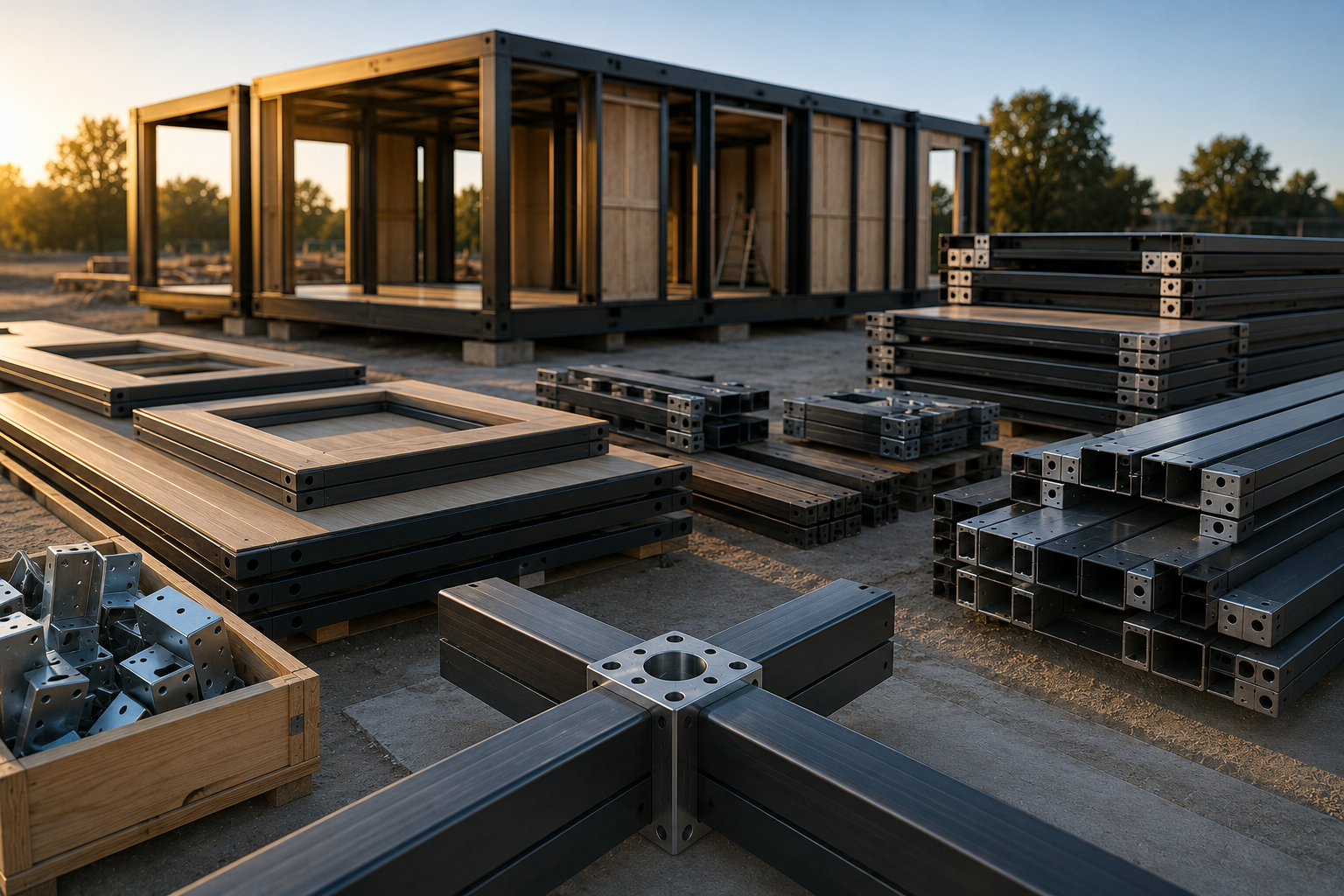
A home goes together fast on-site specifically because it was made to fit. Not roughly. Not close enough. Fit, in the way a manufactured part fits, because the tolerance was held from the first cut to the last connection. Precision is the upstream decision that makes the downstream timeline possible. Fewer things to fix on-site means fewer days between groundbreaking and move-in. That's what tight tolerance actually buys a homeowner: not a number on a spec sheet, but time back.
From our experts
Straight from the Karlev engineering team:
Ready to build together?
Talk with Karlev about bringing this technology to your project.