
Quality control you can verify
Quality control that happens on a factory floor, verified by the State of California before your unit ever reaches the lot. Not a promise, a documented, inspected, state-recognized process.
Two ways to build, two ways to guarantee quality
On a conventional stick-built job site, quality depends heavily on who shows up. A different subcontractor for each trade, a different day, different weather, inspected at scattered intervals set by the county's schedule rather than the work's. Factory-built construction inverts that. The same trained crew, the same climate-controlled bay, the same jigs and fixtures, building the same approved plan set, unit after unit. Quality control stops being a hope and becomes a manufacturing process: a defined sequence of checkpoints, each one inspected before the next stage begins, each one documented.
California doesn't take our word for it
Factory-built housing sold in California is governed by Title 25 of the California Code of Regulations, the state's Factory-Built Housing Program. HCD reviews and approves the complete plan set for a design, architectural, structural, and MEP, before a single unit is built. Then an HCD-approved Quality Assurance Agency performs in-plant inspections on the factory floor, unit by unit, verifying that what is actually being built matches the approved plans HCD signed off on. Only after that verification does a unit earn the HCD insignia of approval, a physical marker placed on the unit before it ships.
Inside the checkpoint sequence
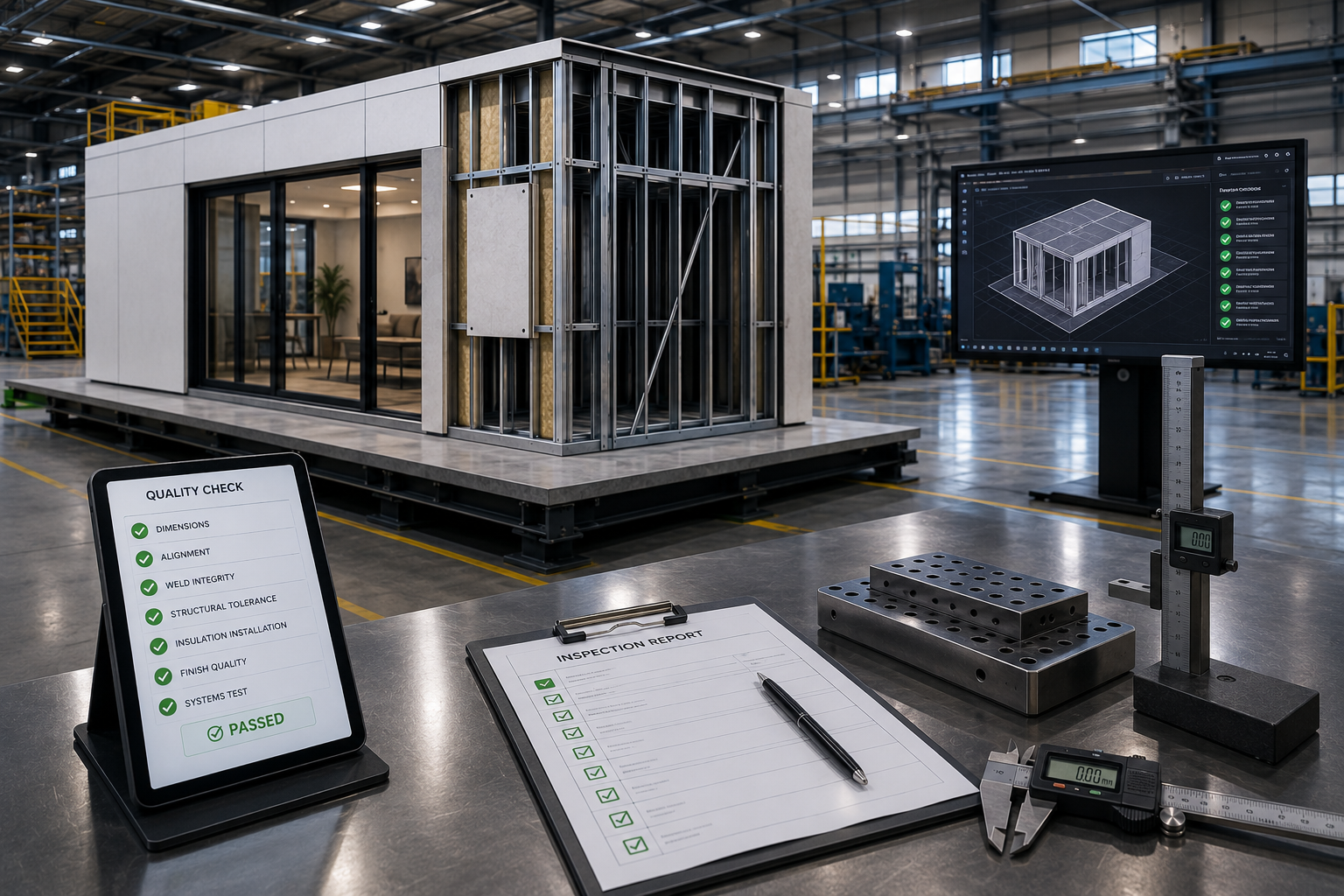
A factory-built quality program is built around checkpoints: points where the work stops, gets inspected, and gets signed off before the next stage begins. Each checkpoint exists because the work at that stage becomes invisible once the next stage starts. You can't verify a weld once it's wrapped in insulation. You can't verify wiring once the drywall is up.
Digital verification on the factory floor
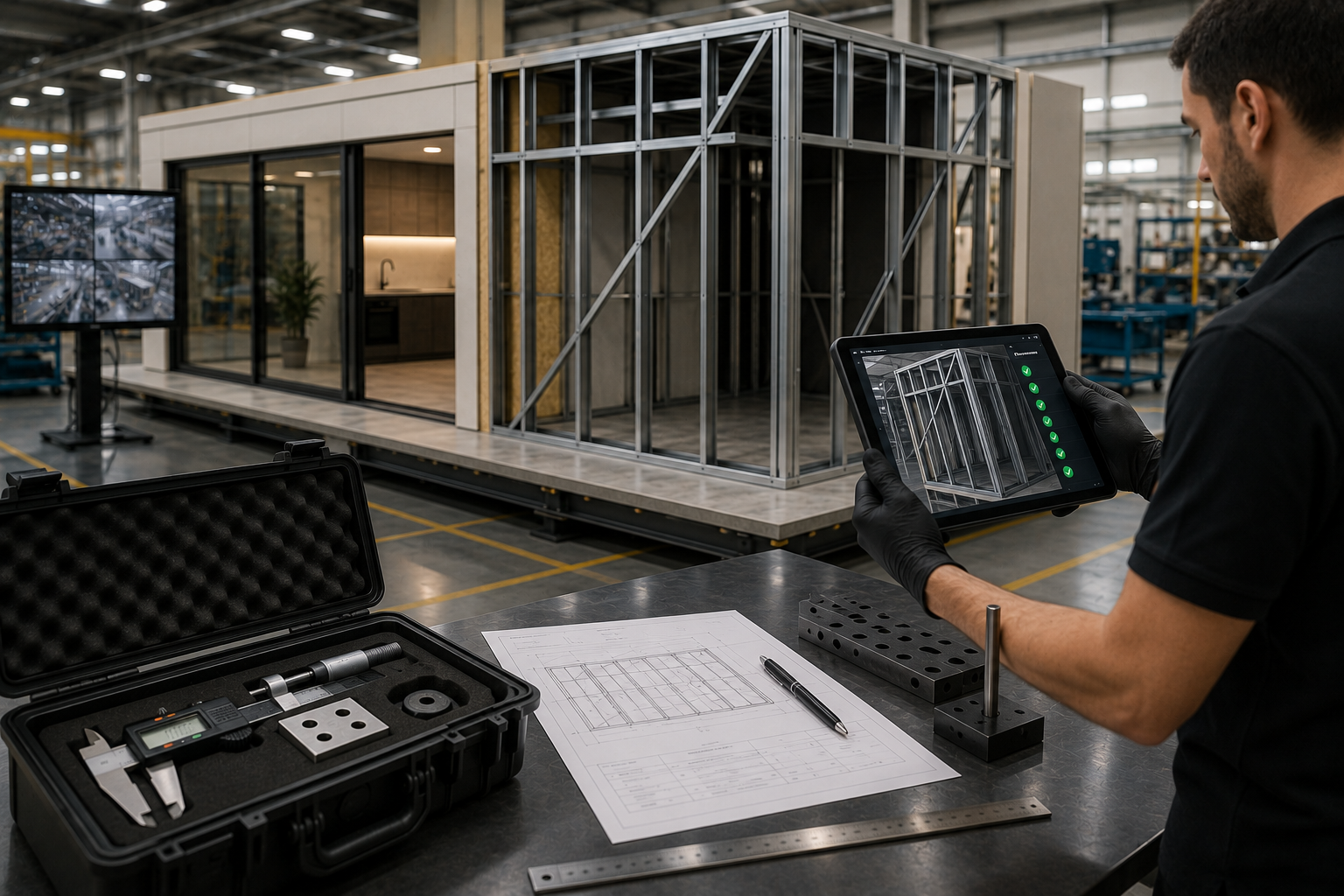
Every inspection is captured against the approved plan set. Inspectors use tablets to compare the physical unit against its digital twin, checking dimensions, tolerances, and finish details before the next stage begins. The result is a live record that ties each unit back to the exact HCD-approved plans it was built from.
A paper trail that matches the plans
Because every unit is built to the same HCD-approved plan set, every checkpoint generates a record that ties back to that plan set. The insignia itself carries that traceability forward: model designation, plan approval number, date of manufacture, serial number. A unit's history doesn't disappear once it leaves the factory floor.
What it means once your unit reaches your lot
With a SmartFrame unit, most of that variance is resolved before the unit ever reaches your address. The structural work, the envelope, the MEP rough-in, all inspected, in sequence, in a controlled environment, against the same approved plans every time. Karlev manages inspection sequencing in-house, start to finish: site assessment, permit application filing, city review management, inspection coordination, and final sign-off through certificate of occupancy.
Quality you can verify, not just take on faith
Every builder says they build to a high standard. Fewer can point to a state agency that inspected the work, unit by unit, against an approved plan set, and issued a physical marker of that verification before the unit ever left the factory. That's the difference between a company's word and a regulatory record.
From our experts
Straight from the Karlev engineering team:
Ready to build together?
Talk with Karlev about bringing this technology to your project.